What Causes The Luminous Lagoon In Jamaica To Glow?
The science behind Jamaica's glowing lagoon: dinoflagellates, river and sea mixing, moonlight, and how to see the glow on a night boat tour from Montego Bay, Falmouth or Ocho Rios.
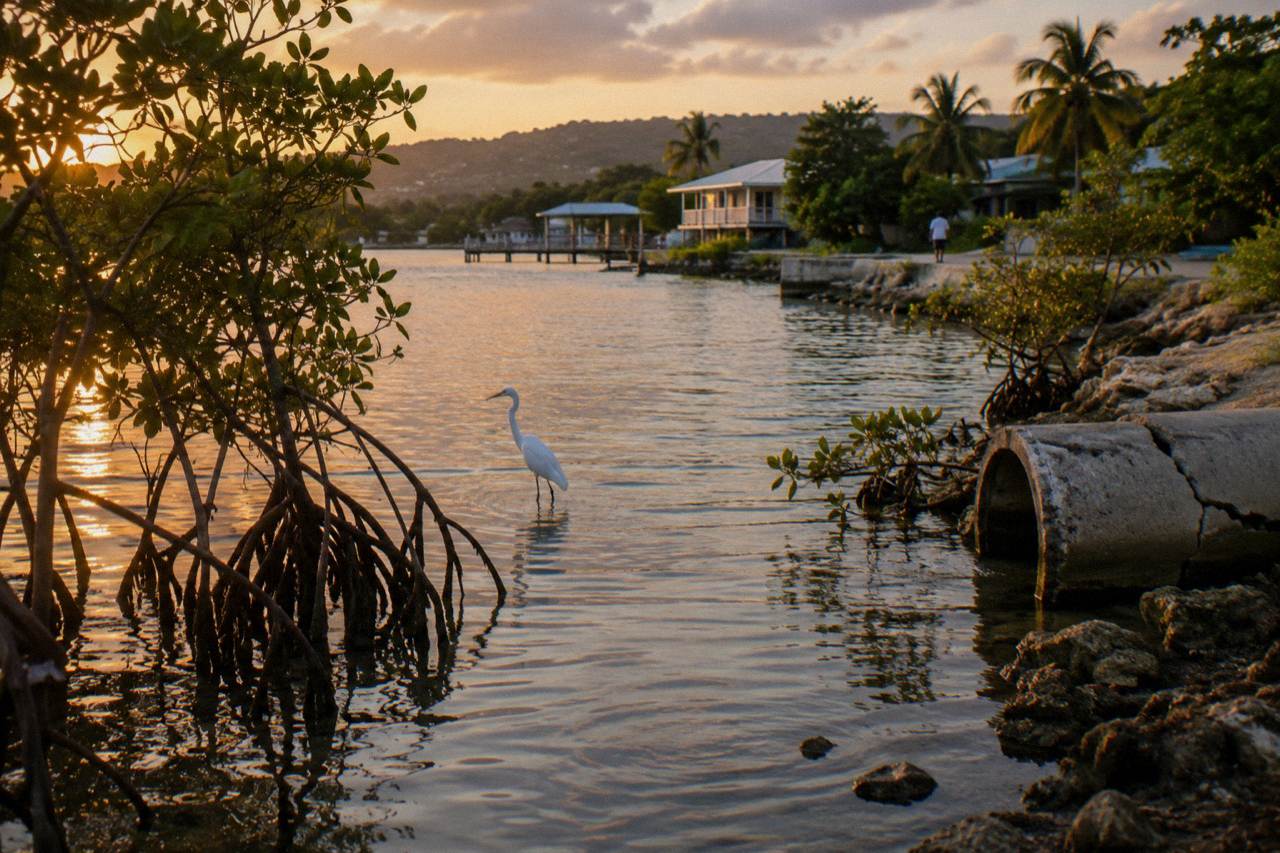
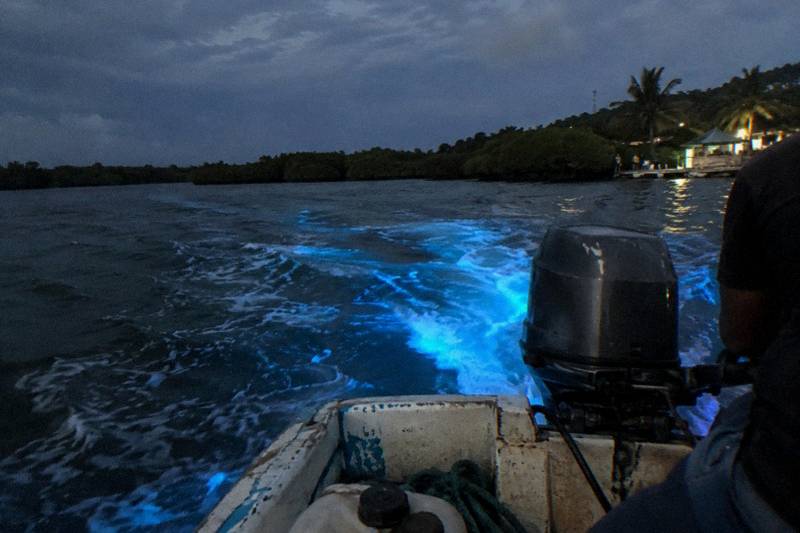
The glow is bioluminescence produced by millions of single-celled algae called dinoflagellates, most notably the species Pyrodinium bahamense, which live in the brackish water where the Martha Brae River meets the Caribbean Sea near Falmouth. When anything disturbs the water, a boat wake, a paddle, a swimmer's arms, each organism flashes a brief blue-green light. A 1966 Johns Hopkins study of the bay measured densities as high as 200,000 cells per litre.
That is the short answer, and it is one of the rare cases in travel where the science is genuinely the attraction. The lagoon runs along the marshland from the small fishing community of Rock to the town of Falmouth in Trelawny, and the organisms thrive precisely where fresh river water and salt sea water mix. The 1966 study of the bay recorded the emission peaking in the blue part of the spectrum, around 476 nanometres, which is why the glow reads as an electric blue-green rather than the warm yellow of a firefly. You can read the operator's explanation on the Glistening Waters scientific information page.
What makes this stretch of coast unusual is not that the organisms exist, dinoflagellates live in oceans worldwide, but that they concentrate here in numbers high enough to light up a boat wake. The species needs warm water above roughly 22 degrees Celsius and salty conditions above about 20 psu to do well, and the estuary where the Martha Brae empties into the sea provides a steady supply of both, along with nutrients carried down from the interior. The result is a lagoon that guests report glowing on most nights, though the strength of the display varies, which we come to below. If you have heard mixed reports and wonder how real the glow actually is, our look at whether the luminous lagoon lives up to the hype explains the science and the tours that let you see it in person.
Communities around the bay knew the glow long before it became a scheduled attraction. That history is worth holding onto, because it frames the evening correctly: you are visiting a natural phenomenon that happens to be bookable, not a show built for visitors.
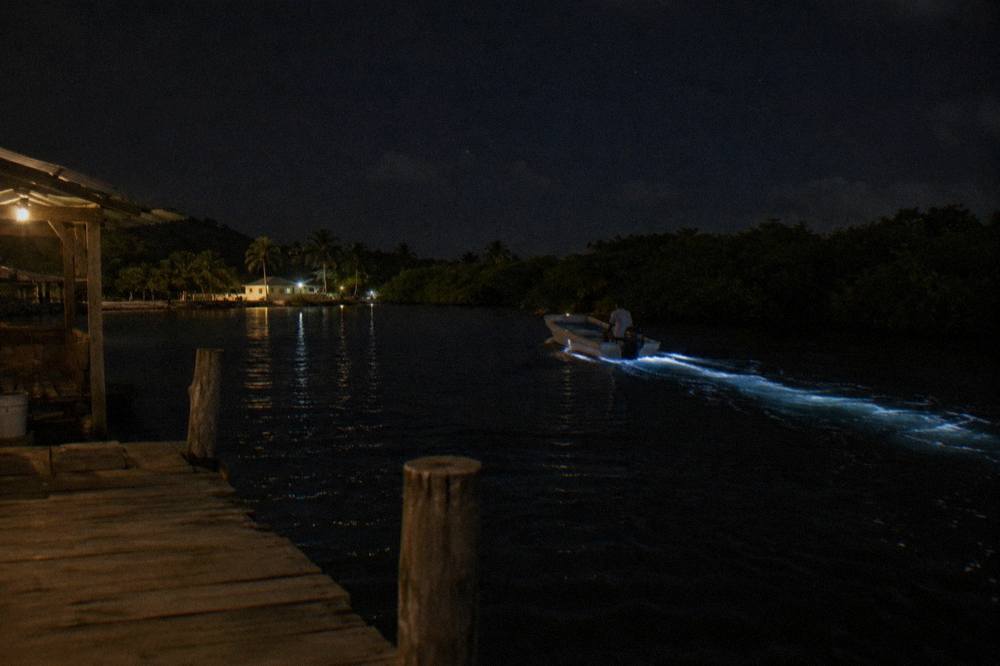
Seeing the mechanism with your own eyes takes a night boat trip, and the listings that carry guests out onto the lagoon differ mainly in where they collect you and how long the whole evening runs. The most reviewed trip covered here is the Mesmerizing Luminous Lagoon night tour, from $100 per person, rated 4.5 from 101 reviews, with hotel pickup from Montego Bay and free cancellation listed; Check availability if that fits your dates. The trio below is a fair starting spread of Montego Bay departures: the Night Swimming and Liming tour from $80 per person, the Explore Montego Bay tour from $90 per person with a swim listed, and the boat cruise with transfers from $69 per person.
What Are Dinoflagellates And Why Do They Flash?
Dinoflagellates are tiny single-celled plankton, and the species behind this lagoon's glow is Pyrodinium bahamense. Inside each cell a chemical reaction between luciferin, oxygen and the enzyme luciferase releases energy as light rather than heat. The flash lasts a fraction of a second and fires when the cell senses movement in the water around it, which is why the glow traces every oar, hull and hand.
The flash is a defence reflex rather than a display. In the open ocean a sudden burst of light can startle the small creatures that graze on dinoflagellates, and it can also silhouette those grazers for bigger predators, turning an attack into a bad idea. In a calm estuary the same reflex turns a moving boat into a paintbrush: the organisms only light where the water is agitated, so the glow follows the wake, outlines a swimmer's limbs and beads off a hand trailed in the water. Guests on the standard operator tour describe exactly that pattern, bright trails around anything that moves and darkness elsewhere.
The mechanics inside the cell are worth a sentence more. The trigger is mechanical: the shear of moving water sets off the chemistry. That is why still water stays dark and a hand suddenly swept through it erupts in light.
The organisms recharge on a daily rhythm. They photosynthesize and store the chemistry for their flash during daylight hours, which is part of the reason guides prefer evenings that follow a clear, sunny day. The genus background, including its preference for warm, saline bay water, is summarized on the species profile for Pyrodinium bahamense, and the original density measurement for this bay comes from the 1966 Johns Hopkins study published in the Journal of Marine Research.
Because the light is emitted by the cells themselves rather than reflected, the display is a deep dive guide's subject more than a photographer's. The operator notes that flash photography is not permitted and that a DSLR works best, and no listing here promises a photo result. Our longer piece on capturing the glow covers that ground in detail at lagoon photography and video.
Where Exactly Does The Glow Happen?
The glowing water sits in the lagoon at Glistening Waters, officially the Glistening Waters Marina, Hotel and Attraction, on the Main Highway A1 at Rock, Falmouth, Trelawny, roughly 30 minutes east of Montego Bay by the marina's own directions. Boats depart nightly from that dock at sunset, and the tour spends about 45 to 60 minutes on the water. The lagoon itself is the estuary where the Martha Brae River meets the sea.
The geography matters because it explains the chemistry. River water arriving from the Martha Brae is fresh and nutrient-rich; sea water pushing in at high tide is warm and salty. Dinoflagellates prosper in that in-between zone, and the mixing is continuous, so the population holds through the year rather than blooming and vanishing. The water is shallow, which matters too: the operator describes the depth as about 3 to 8 feet, or more in places, so the organisms sit close to the surface, close to boats and close to swimmers.
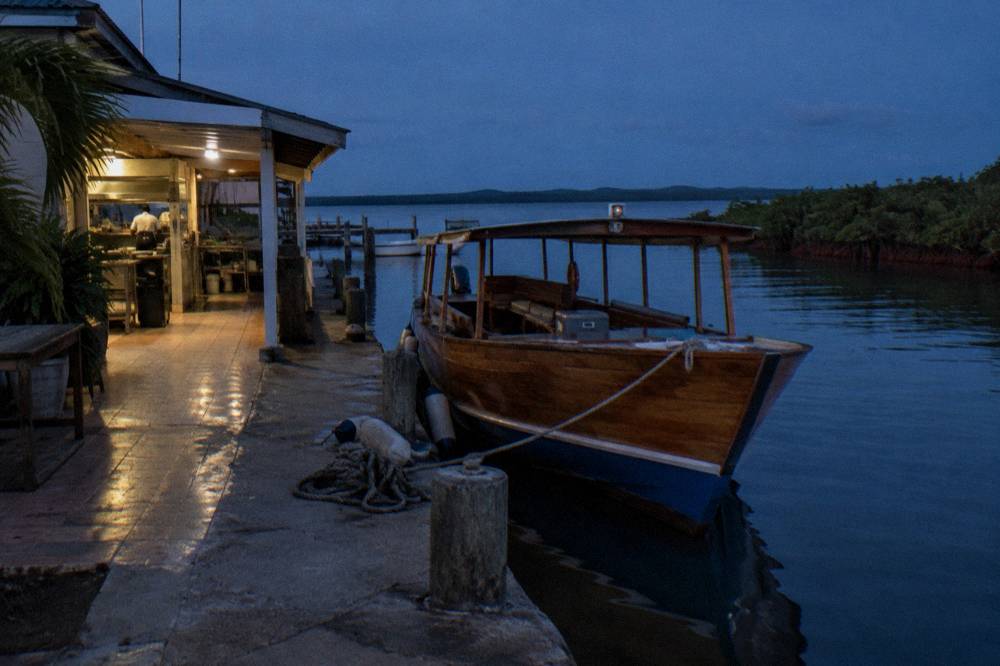
The marina is a working site rather than a theme park. Four boats run the nightly tours, carrying up to 30 guests each per the operator, with life jackets available and swimming offered as part of the standard trip. There is a restaurant at the dock serving dinner before or after the sail. If you are weighing the dockside experience against the listing options that bundle transport, the comparison at Glistening Waters marina and restaurant breaks down what is on site.
Why Does The Lagoon Glow Brighter On Some Nights?
Moonlight is the single biggest factor. The organisms flash every night, but on dark, moonless nights the contrast is far higher and the display looks dramatically brighter; around the full moon, the same flash competes with moonlight and reads as faint. Heavy or recent rain also dims the glow by diluting and cooling the water. Operators and guests agree the best nights are dark, calm and following a sunny day.
This is worth internalizing before you book, because it reframes expectations. The lagoon is not a light show that switches on at full power nightly; it is a natural phenomenon whose visibility moves with the sky. The new moon window, and roughly three days either side of it, gives the darkest skies. Overcast nights can still work, and even under a bright moon the movement trails remain visible in the disturbed water around the boat, just harder for the eye to pick out.
| Condition | Effect on the glow | What it means for a visit |
|---|---|---|
| New moon, ±3 days | Darkest skies, strongest contrast | Best window to book a night tour |
| Full moon | Flash still occurs but looks fainter | Manage expectations, or shift dates |
| Recent heavy rain | Dilution and cooler water reduce intensity | Consider rebooking if storms just passed |
| Calm night after a sunny day | Organisms recharged by daylight | Often the strongest displays guests report |
| Overcast but dry | Glow usually still visible | Still worth going |
If your dates are flexible, planning around the moon is the single most useful thing you can do to raise your odds of a vivid night, and our dedicated moon phase guide for the lagoon goes month by month. If you are not flexible, go anyway: the tours run every night of the year, weather permitting, and the swim is offered regardless, since your own movement in the water creates the brightest trails of all, close up.
Can You Swim In The Glow?
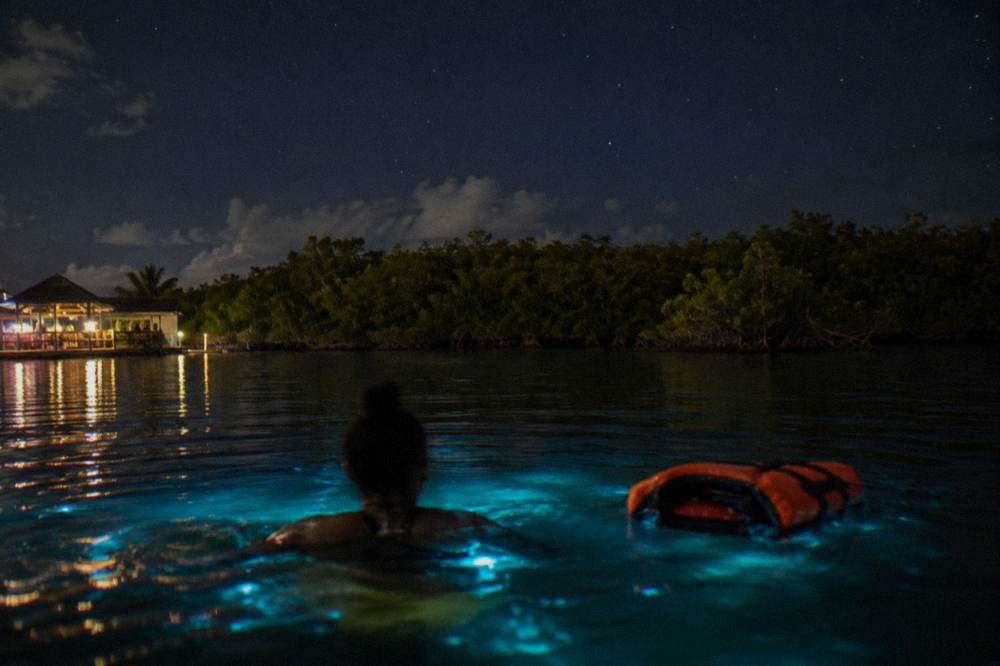
Yes, swimming is part of the standard operator tour and is listed on many of the boat trips covered here. Because the organisms flash on contact, a swimmer's arms and legs leave glowing trails, which guests consistently describe as the most memorable part of the night. The water is shallow and warm, roughly 3 to 8 feet by the operator's description, and life jackets are available on the boats.
The swim is optional, and plenty of guests stay aboard to watch the wake light up instead. If you do get in, the practical notes are simple: bring swimwear and a towel, as the operator states, and expect a soft, muddy lagoon floor underfoot, which is why water shoes are a common recommendation in guest accounts. Dark swimwear is a sensible choice, since the brackish water can stain lighter fabrics. Changing rooms are available at the marina.
Not every listing includes the swim in the same way, so read the inclusions on the specific product. Among the Montego Bay departures, the Jamaica bioluminescent lagoon boat cruise with transfers, from $69 per person and rated 3.9 from 89 reviews, lists the swim and round-trip transfers from the Montego Bay area. From the Ocho Rios side, the Glistening Water tour from Ocho Rios and Runaway Bay hotels, from $65.42 per person with a minimum of four people per booking, includes a life jacket and complimentary fruit or rum punch alongside the entrance fee.
Does The Lagoon Glow All Year Round?
The tours run year-round, seven nights a week, weather permitting, and the organisms are present in every season. Visibility trends better in the dry season, roughly December to April, when skies are clearer and heavy rain is less likely to dilute the estuary. Hurricane season, June through November, occasionally disrupts sailing when storms pass through, so dry-season visits carry the fewest scheduling risks.
The seasonal point is really just the moon and rain points applied to a calendar. Dry season means more calm, clear nights, fewer episodes of upstream rain cooling and thinning the dinoflagellate population, and no hurricane-season worry. The statistical peak of Atlantic hurricane activity falls from August to October, and while Falmouth's cruise port reopened to passengers in December 2025 after Hurricane Melissa, a wet-season booking always carries a small chance of a weather shuffle. The listings covered here state free cancellation on each product's own terms, which softens that risk.
Which Night Tour Puts You Closest To The Glow?
Every lagoon trip ends on the same water, so the differences that matter are departure point, price and what is bundled. Montego Bay departures run from $55 to $200 per person across the listings covered here; Falmouth departures start from $76.93 with the shortest drive; Ocho Rios departures cost more in time, roughly an hour's drive each way. The featured Montego Bay night tour at 4.5 from 101 reviews is the most reviewed option.
The table below pulls the most reviewed departures together so you can see the spread at a glance. Prices are from prices as listed, and ratings are printed with their review counts, because a rating without its pool tells you very little.
| Listing | Departs | From price | Rating | Duration |
|---|---|---|---|---|
| Mesmerizing Luminous Lagoon Night Tour | Montego Bay hotels | from $100 per person | 4.5 from 101 reviews | 1 hour |
| Bioluminescent Lagoon Boat Cruise with Transfers | Montego Bay hotels | from $69 per person | 3.9 from 89 reviews | 1.5 to 2 hours |
| Explore Montego Bay to Luminous Lagoon Night Tour | Montego Bay hotels | from $90 per person | 4.5 from 78 reviews | 1 hour |
| Luminous Lagoon Dark Night Tour | Ocho Rios and Runaway Bay hotels | from $79 per person | 4.5 from 75 reviews | 3 hours |
| Private Tour from Ocho Rios and Runaway Bay | Ocho Rios and Runaway Bay hotels | from $85 per person | 5 from 90 reviews | 2 hours |
One nuance worth knowing: the durations in those listings are total durations, which usually include the drive to Falmouth and back, not an hour on the water. The boat ride itself is shorter, typically 35 to 45 minutes on the lagoon per published visitor guides. A one-hour listing from Montego Bay is a compact evening; a three-hour listing from Ocho Rios is mostly transfer time wrapping the same water.
For travelers who want the smallest group, the private tour from Ocho Rios and Runaway Bay, from $85 per person and carrying up to 15 guests, is the standout: a perfect 5 from 90 reviews, with entry fee, bottled water and hotel pickup listed as included. It is the strongest rating with a substantial review pool anywhere on this page. For anyone anchored in Montego Bay who wants a private vehicle rather than a shared coach, the private Luminous Lagoon tour from Montego Bay, from $90 per person with all fees and taxes listed as included, covers the same water at a similar price with two reviews so far.
Is The Lagoon's Glow Different From Other Bioluminescent Bays?
Jamaica's lagoon is one of a handful of bioluminescent bays in the world, and its distinguishing feature is that swimming is part of the standard tour. At the well-known Puerto Rico bays, Mosquito Bay in Vieques and Laguna Grande in Fajardo, viewing is by kayak and swimming is not permitted, so the experience is genuinely different rather than better or worse. The chemistry is the same family of organisms. If you're curious where else the water glows like this, our guide to the world's bioluminescent bays explains why so few of them exist.
That distinction shapes which destination suits you. If being in the water, trailing light off your own arms, is the appeal, the Falmouth lagoon is built for it, with shallow warm water and swim stops as standard. If you prefer to glide over the glow in silence with stricter conservation rules, the kayak bays offer that instead. Our full comparison walks through the practical differences, including seasonality and cost, at Jamaica's lagoon versus Puerto Rico's bioluminescent bays. And if a part of you still doubts that the water really lights up, our guide to the science behind Jamaica's glowing water explains exactly what triggers the phenomenon.
Counts of the world's luminous bays differ depending on who is counting and what criteria they use, so treat any precise number you see elsewhere with caution. What is solid is that persistent bay-scale bioluminescence of this kind is rare, Jamaica's site is among the few, and the confluence of river and sea at Falmouth keeps it unusually reliable.
Common Questions About What Causes The Luminous Lagoon To Glow
What Causes The Luminous Lagoon In Jamaica To Glow?
Millions of dinoflagellates, chiefly the species Pyrodinium bahamense, live in the brackish estuary where the Martha Brae River meets the Caribbean Sea near Falmouth. When movement disturbs the water, each cell fires a fraction-of-a-second flash of blue-green light, so boat wakes, oars and swimmers all leave glowing trails.
Can You Actually See The Glow On Every Tour?
Guests report a visible glow on most nights, but no operator guarantees the intensity. Moonlight, recent rain and season all change how bright the display reads. Book near the new moon for the darkest skies and strongest contrast.
Why Does A Full Moon Make The Glow Look Weaker?
The organisms flash just as often under a full moon, but the ambient moonlight lowers the contrast, so the blue-green light is harder for your eye to pick out. Around the new moon the same flash looks dramatically brighter.
Does Rain Stop The Lagoon From Glowing?
Heavy or recent rain can dim the display by diluting the dinoflagellates and cooling the water. Tours still run in light rain, and drops striking the surface create their own small flashes, but a night straight after a big storm is often a weaker showing.
Is The Glow Caused By Pollution Or Chemicals?
No. It is a natural biological process, a chemical reaction inside single-celled algae that releases energy as light. The same family of organisms produces bioluminescent bays in several parts of the tropical world.
How Long Is The Boat Ride On The Glowing Water?
The on-water portion of the standard operator tour runs about 35 to 45 minutes, with swimming offered during the trip. Listing durations are totals that include road transfers, so a one-hour Montego Bay listing and a three-hour Ocho Rios listing can both include the same boat ride.