Is It True That The Water Glows In Jamaica?
Yes, the water really does glow in Jamaica, in one lagoon near Falmouth where microscopic organisms light up when disturbed. Here is the science, where to go, and how to see it.
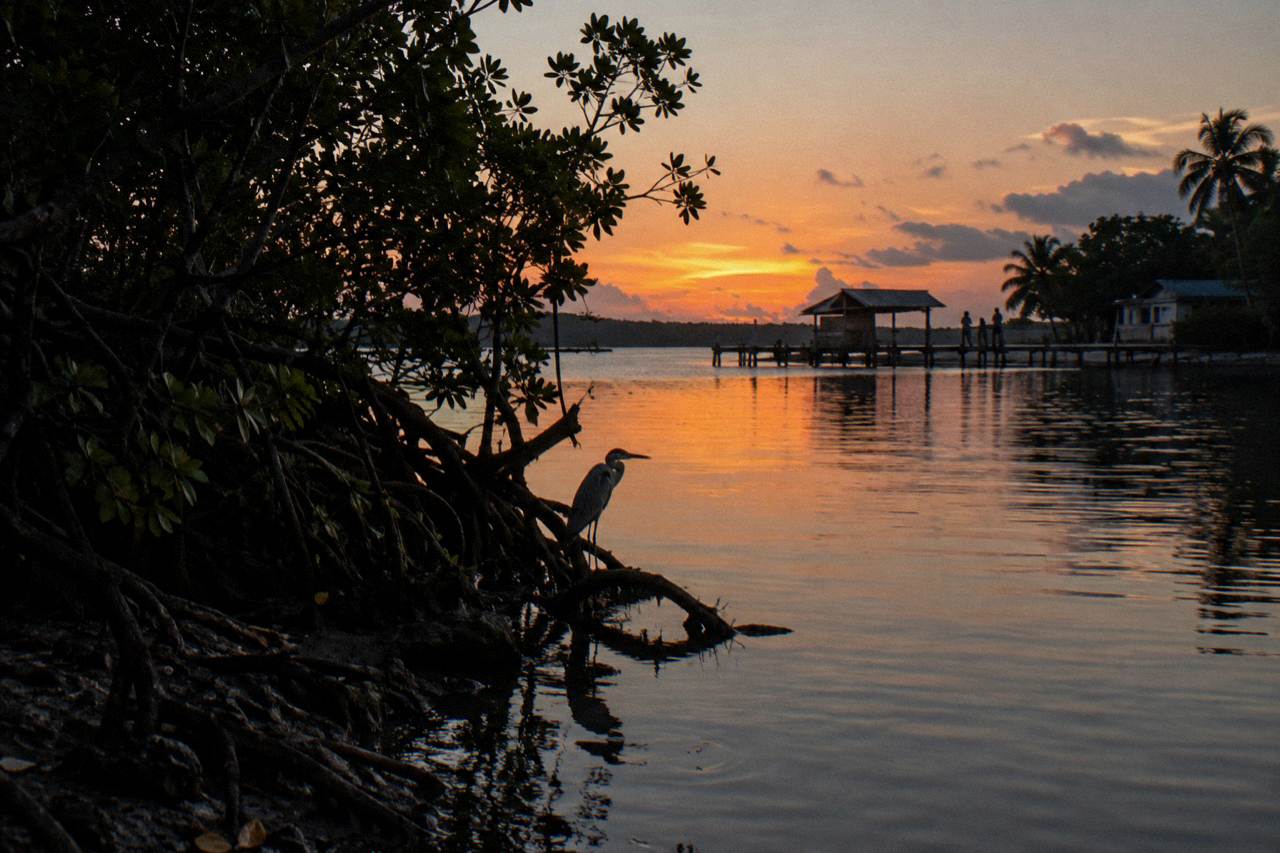
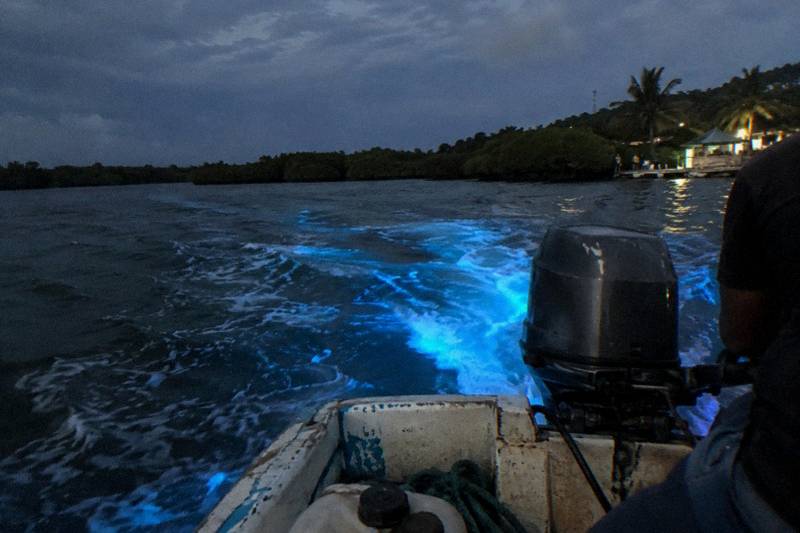
Yes, it is true, with one precise catch: the famous glow is in one lagoon on the island's north coast, not along every beach. The Luminous Lagoon, also called Glistening Waters, sits where the Martha Brae River meets the Caribbean Sea near Falmouth in Trelawny. Microscopic organisms in the brackish water emit blue-green light when disturbed, so boat wakes, paddles and swimmers leave glowing trails on most nights.
That is the short answer, and it is the answer backed by both the operator that runs the nightly boat trips and by a peer-reviewed study published in the Journal of Marine Research in 1966, which examined "a phosphorescent bay in Falmouth Harbor, Jamaica" and measured the light-producing organism at densities as high as 200,000 cells per litre. The phenomenon is not a legend, a filter trick or a staged light show. It is biology, and it runs on its own schedule.
What tends to surprise first-time visitors is how localized it is. Guests arrive expecting a coastline that glows, and instead find a specific stretch of marshland lagoon running from the fishing community of Rock to the town of Falmouth, tours departing nightly from Glistening Waters Marina, Hotel and Attraction on the Main Highway A1. The organisms thrive where fresh river water and salt sea water mix, and that mixing zone is what makes this one lagoon, and not the beaches at Montego Bay or Negril, light up.
The most reviewed way to see it is the Mesmerizing Luminous Lagoon night tour, from $100 per person, rated 4.5 from 101 reviews, with hotel pickup and drop-off from Montego Bay hotels included and free cancellation listed. If you are already convinced the glow is real and just want a seat on a boat, the listings further down this page are a good place to start.
For everyone else, the rest of this article answers the questions that follow the first one: what exactly is glowing, whether it glows every night, whether you can get in the water, and what a ticket actually buys you.
What Makes The Water Glow?
The glow comes from a dinoflagellate called Pyrodinium bahamense, a microscopic single-celled organism that lives in the lagoon's brackish water. When something disturbs the water, a boat propeller, a paddle, a swimmer's hand, the organisms emit a flash of blue-green light. The emission peaks at 476 nanometres, which is why the glow reads as blue-green rather than white or yellow.
The mechanism is called bioluminescence, and it is the same family of chemistry that fireflies use. The dinoflagellates carry the light-producing reaction inside their cells, and mechanical disturbance triggers it. On a boat tour this shows up as a luminous wake behind the hull, glowing streaks when the guide agitates the water, and, for swimmers, a halo of light around every movement of arms and legs. The organisms recharge during daylight hours through their circadian rhythm, which is part of why clear evenings after sunny days tend to produce stronger displays.
Why here, specifically? The lagoon sits where the Martha Brae River flows into the Caribbean Sea, and the steady mixing of fresh and salt water creates brackish, nutrient-rich conditions the organisms favor. The operator's own science page describes this river-sea confluence as the reason the population persists in this estuary. It is a Goldilocks setup: too much freshwater or too much open sea and the population thins, which is also why heavy upstream rain can dim the effect.
The 1966 Johns Hopkins study remains the reference point for the hard numbers. It identified the species, documented the densities and recorded the emission spectrum. For a deeper dive into the chemistry, the site's bioluminescence explainer walks through the reaction step by step, and the operator's scientific information page publishes its own summary of what lives in the water.
One point worth setting straight: nothing is added to the water. No dye, no lights, no projectors. The glow itself is entirely wild biology, and its strength rises and falls with natural conditions rather than with a switch. That is both the appeal and the one honest caveat of the whole attraction, which the next section addresses directly.
Does The Lagoon Glow Every Night?
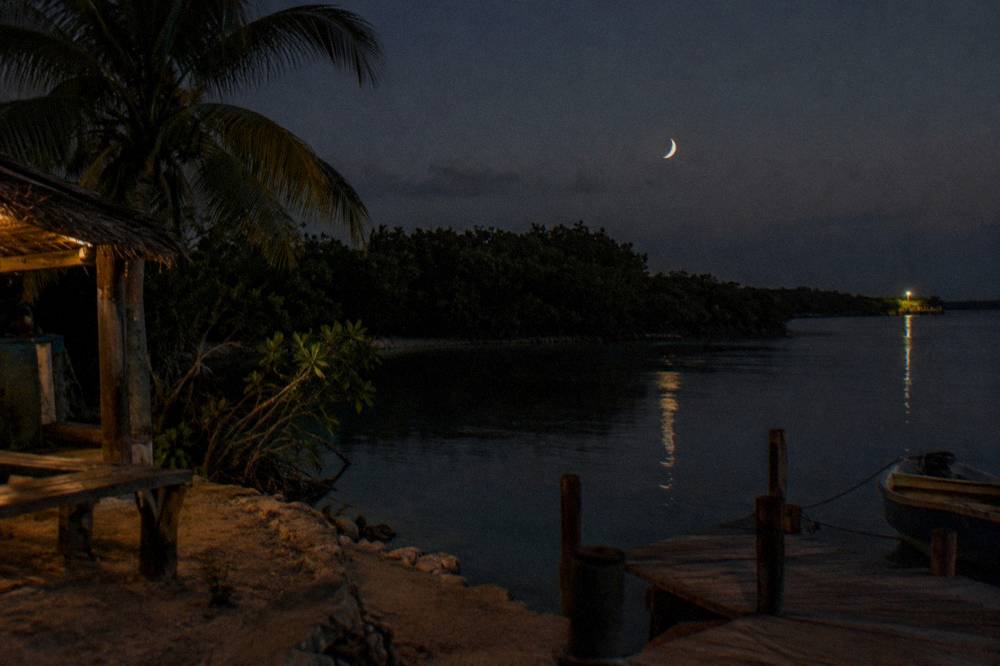
Yes, the organisms are present year-round and produce light every night, but how visible the glow is depends mainly on darkness, moon phase and recent rain. Operators and guest reports agree the glow is brightest on dark, moonless nights after sunny days, harder to see under a full moon, and dimmed by heavy or recent upstream rainfall. Nobody can promise the intensity on any given night.
This is the part of the story where honesty matters, because a first-time visitor who books a full-moon Saturday and expects a neon lagoon can walk away disappointed. The light is always being produced; the contrast is what changes. Moonlight washes out the visual effect the same way city lights wash out stars. The glow is still there, trails still form when the water moves, but the eye has less darkness to measure it against.
The practical planning factors, drawn from operator guidance and consistent guest reports:
| Factor | Effect on the glow | What it means for planning |
|---|---|---|
| Moon phase | Brightest on new moon nights and roughly three days either side; full moon reduces contrast | Check a lunar calendar before picking your date |
| Recent rain | Upstream rain dilutes the organisms and introduces colder water, dimming the display | If it has rained heavily inland, temper expectations |
| Season | Tours run year-round; the dry season from December to April is often described as yielding the brightest conditions | Dry-season trips get the best odds |
| Time of night | Boats depart at and after sunset, when the sky is dark enough | Darkness, not the clock, sets visibility |
Tours operate seven nights a week, weather permitting, which means the calendar is flexible if yours is. Travelers with open dates can shift a lagoon night toward the new moon; travelers on fixed dates should simply go, knowing the glow varies. Reviewers on the listings themselves make the same point, with notes like "check the moon phase" appearing on recent guest feedback. The site's dedicated moon phase guide and best time to go guide go deeper on picking the night.
There is no operator policy that guarantees a refund for a weak glow; the standard protections are the free-cancellation terms each listing states, which typically require cancelling in advance rather than on the boat. That is a fair deal for a natural phenomenon, and it is the reason this site never promises a sighting, only reports what operators and guests describe.
Where Exactly Does The Glowing Happen?
The glowing water runs along the marshland between the fishing community of Rock and the town of Falmouth in Trelawny parish, on Jamaica's north coast. Boat tours depart from Glistening Waters Marina, Hotel and Attraction on the Main Highway A1, roughly 30 minutes east of Montego Bay by the operator's own estimate.
Geography is where most of the mythology around "glowing water in Jamaica" goes wrong. Visitors staying in Montego Bay, roughly a 45-minute nonstop drive of about 22 miles away by one route estimate, can reach the marina easily on an evening trip. From Ocho Rios the drive is roughly an hour, about 41 miles. From Negril it is about 2 hours, so treat it as approximate. These are rough drive times, but they frame the real decision: the glow is in Trelawny, and everything else is transport. The rest of the planning pages sit on Luminous Lagoon Jamaica Tour.
That transport is precisely what the bookable listings solve. The Jamaica: Bioluminescent Lagoon Boat Cruise with Transfers, from $69 per person and rated 3.9 from 89 reviews, includes round-trip transfers from the Montego Bay area and the boat ride on the lagoon, with free cancellation listed. For travelers coming from the east, the Luminous lagoon Dark Night Tour from Ocho Rios and Runaway Bay Hotels runs from $79 per person, rated 4.5 from 75 reviews, with hotel pickup and drop-off included and the entrance fee in the price.
Cruise passengers need a different and more careful answer. Scheduled Falmouth calls mostly end mid-afternoon, with recent October 2026 departures logged between 15:00 and 16:45, and the lagoon boats leave at sunset. A cruise guest therefore cannot normally fit a night boat, and no listing here promises otherwise. The site's Falmouth cruise port guide covers what a port day can realistically include.
For land-based travelers, the marina itself is more than a dock. Glistening Waters operates a restaurant daily from 8am to 9pm and a cocktail bar from 11am to 10pm, so an evening itinerary can pair dinner with the boat. The operator also offers free transport from the Montego Bay and Runaway Bay areas for groups of 8 or more, restrictions apply, which is an operator line worth knowing before you book anything at all.
Can You Swim In The Glowing Water?
Yes, swimming is part of the standard operator tour and is offered on many of the bookable listings, and it is optional every time. The water is shallow and warm, with depth reported by the operator as about 3 to 8 feet, or more. Staying on the boat is a completely normal choice, and the glow is visible either way from the vessel.
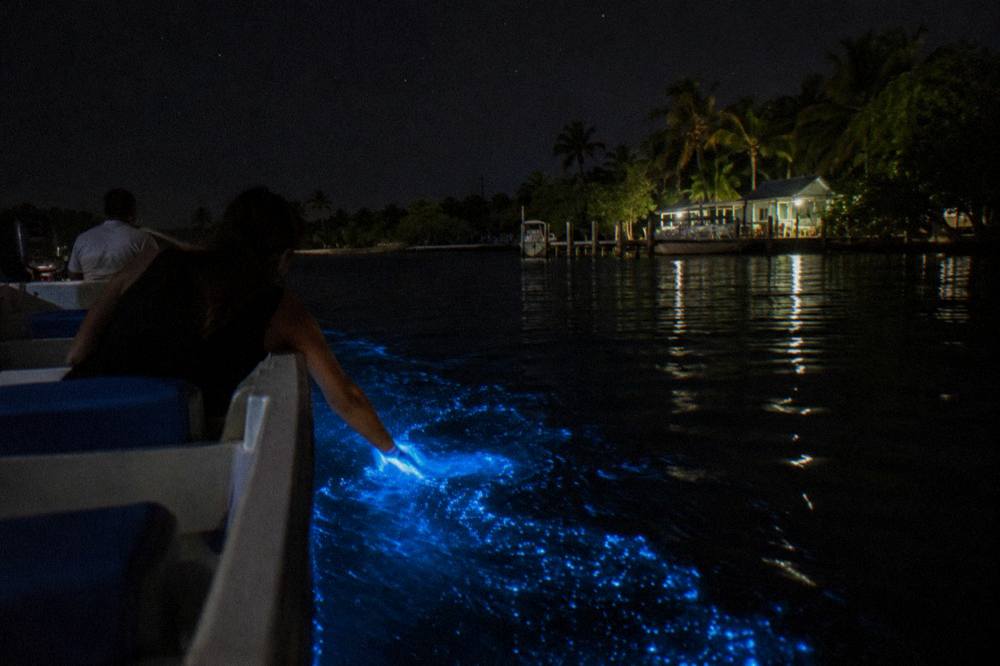
The swim is what turns spectators into participants, and it is the detail that separates this lagoon from some other bioluminescent bays, where swimming is not permitted at all. When a swimmer drops in, every motion produces a halo of blue-green light: hands, feet, the wake of a slow kick. Guests report it as the most memorable part of the trip, though the experience is entirely optional and non-swimmers who stay aboard still see the boat's luminous wake clearly.
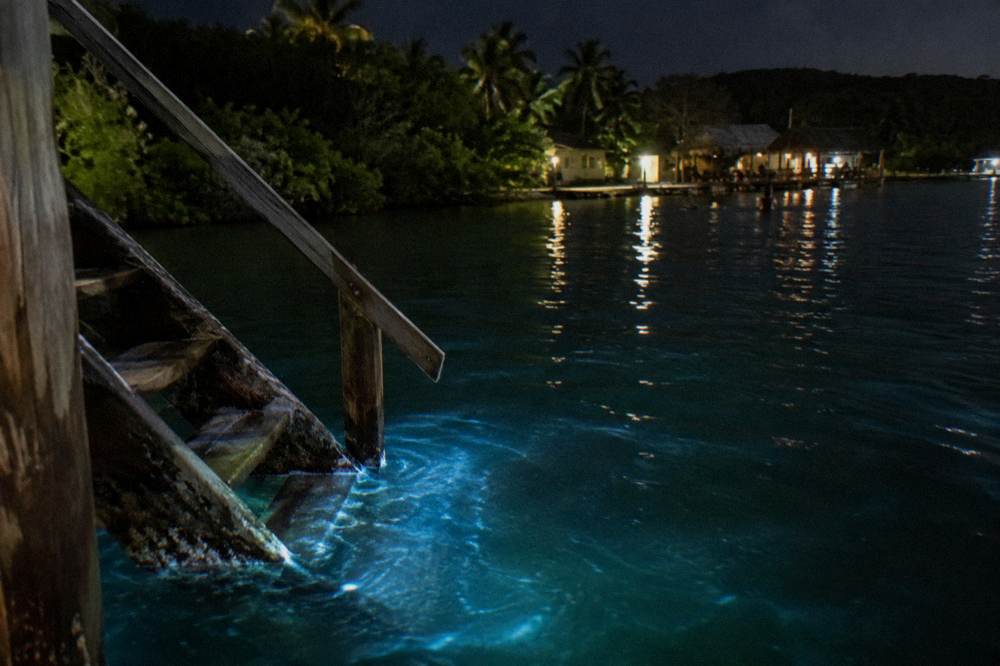
A few practical notes come from the operator and consistent guest reports rather than from any listing's marketing. Bring swimwear and a towel, as the operator states, and note that changing rooms are available at the marina. Life jackets are available on the tours. The lagoon floor is soft and muddy underfoot, so water shoes or rubber-soled waterproof shoes are the sensible choice. Bug spray is wise at night, but guests are advised not to apply it immediately before swimming. One wardrobe tip recurs across visitor guides: wear a dark swimsuit, as the brackish water can stain lighter colors.
Which listings actually offer the swim matters, because not all of them say so. The From Montego Bay: Luminous Lagoon Boat Tour with Transfer lists swimming, as does the Explore Montego Bay to Luminous Lagoon night tour, from $90 per person and rated 4.5 from 78 reviews, whose listing describes hotel pickup plus a boat ride with a swim in the glowing lagoon, capped at 200 guests. Always read the inclusions on the specific listing you book rather than assuming.
Photography deserves one honest paragraph, because expectations run high. The operator states that no flash is allowed and that a DSLR works best; phone cameras are not promised to capture the glow, and in practice phone shots of bioluminescence often come out dark. Go for the experience, treat any photo as a bonus, and see the site's photos and video guide for what actually works.
How To See The Glow For Yourself
Book an evening boat tour from Glistening Waters Marina, timed near a new moon if your dates allow, and choose the listing whose departure point, price and inclusions match your trip. Featured options run from $61.57 per person for a Montego Bay transfer tour up to $100 per person for the most reviewed night tour, all with free cancellation listed. The glow is real on most nights; the intensity is nature's call.
The cleanest first booking for a Montego Bay-based traveler is the featured Mesmerizing Luminous Lagoon Night Tour: from $100 per person, rated 4.5 from 101 reviews, a listed one-hour duration, hotel pickup and drop-off from Montego Bay hotels included, free cancellation listed, and up to 25 guests per departure. It is the most reviewed listing covered on this site, which is the only superlative this site will print.
Budget-conscious travelers have a genuinely cheaper route. The From Montego Bay: Luminous Lagoon Boat Tour with Transfer runs from $61.57 per person over about 3 hours, rated 3.8 from 16 reviews, with hotel pickup and drop-off, the boat trip, a skipper and life jackets included, and swimming listed. The trade-off is a smaller review pool and a more basic package, not a different lagoon: every boat on every listing visits the same glowing water.
Travelers who want a private vehicle rather than a shared transfer have a strong option in the Private Tour from Ocho Rios Runaway Bay to the Luminous Lagoon, from $85 per person, rated 5 from 90 reviews, two hours, up to 15 guests, with bottled water, hotel pickup and drop-off, transport by air-conditioned minivan and the entry fee all included, plus free cancellation listed. Its perfect rating across 90 reviews is among the strongest signals on any listing here, and it is the pick for families and small groups.
Doubters are the reason this article exists, so here is the closing frame: the question "is it true that in jamaica the water glows" has a documented answer, a named organism, a 1966 peer-reviewed study, a specific lagoon and a nightly fleet of boats. The only thing nobody can sell you is a guarantee of brightness, because the moon and the rain do not take bookings. What you can book is the boat, the pickup and the hour on the water, and on a dark, calm night after a sunny day, guests report it is unlike anything else on the island.
If you are still comparing options, the trio below covers three Montego Bay starting points: the Night Swimming and Liming tour from $80 per person with alcoholic beverages listed, the swim-inclusive Explore Montego Bay tour from $90 per person, and the boat cruise with transfers from $69 per person.
Common Questions About The Glowing Water In Jamaica
Is It True That The Water Glows In Jamaica?
Yes, at the Luminous Lagoon, also called Glistening Waters, near Falmouth in Trelawny. Dinoflagellates in the brackish water emit blue-green light when disturbed, and nightly boat tours let you see it, and on many listings, swim in it.
Can You See The Glow Every Night Of The Year?
The organisms produce light year-round and tours run seven nights a week, weather permitting. Visibility varies with moon phase, recent rain and season, with dark, moonless nights after sunny days reported as the brightest.
Is It Safe To Swim In The Glowing Water?
Swimming is part of the standard operator tour, optional on every listing, with life jackets available. The water is shallow, roughly 3 to 8 feet as the operator reports. This site does not issue safety verdicts; check current advice and the listing's own terms.
How Much Does A Glowing Lagoon Tour Cost?
Listings covered here run from $61.57 per person for a Montego Bay transfer tour up to $100 per person for the most reviewed night tour, with private and combo options higher. Each figure is the listing's own from-price; check the live listing for your date.
Can You Photograph The Glow With A Phone?
The operator says no flash is allowed and a DSLR works best, and phone cameras are not promised to capture the glow. Most visitors experience it with their eyes and treat photos as a bonus.
Can Cruise Passengers See The Glowing Water?
Usually not on a night boat. Most Falmouth calls end mid-afternoon, hours before sunset departures, so a night lagoon trip does not fit a standard port day. Check your ship's all-aboard time before considering anything at the marina.