Best Time To Visit The Luminous Lagoon
The glow is in the water year-round, but the night you pick changes how well you see it. Here is how month, moon and rain shape a Luminous Lagoon evening, and how to book around it.
Short answer
Tours run year-round from Glistening Waters Marina in Falmouth, departing at sunset. The dry season, December through April, often gives the brightest conditions, and dark, moonless nights show the glow best. Heavy or recent rain can dim it. No operator can promise intensity, so book a night near the new moon and keep free cancellation.
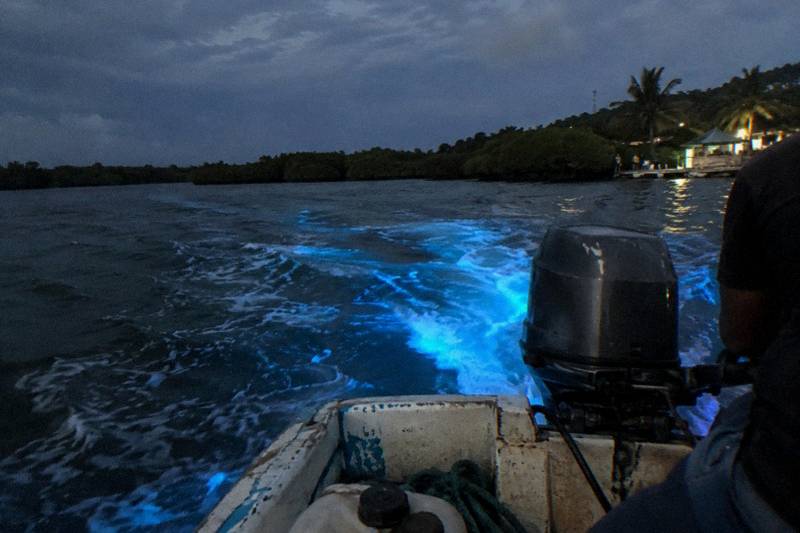
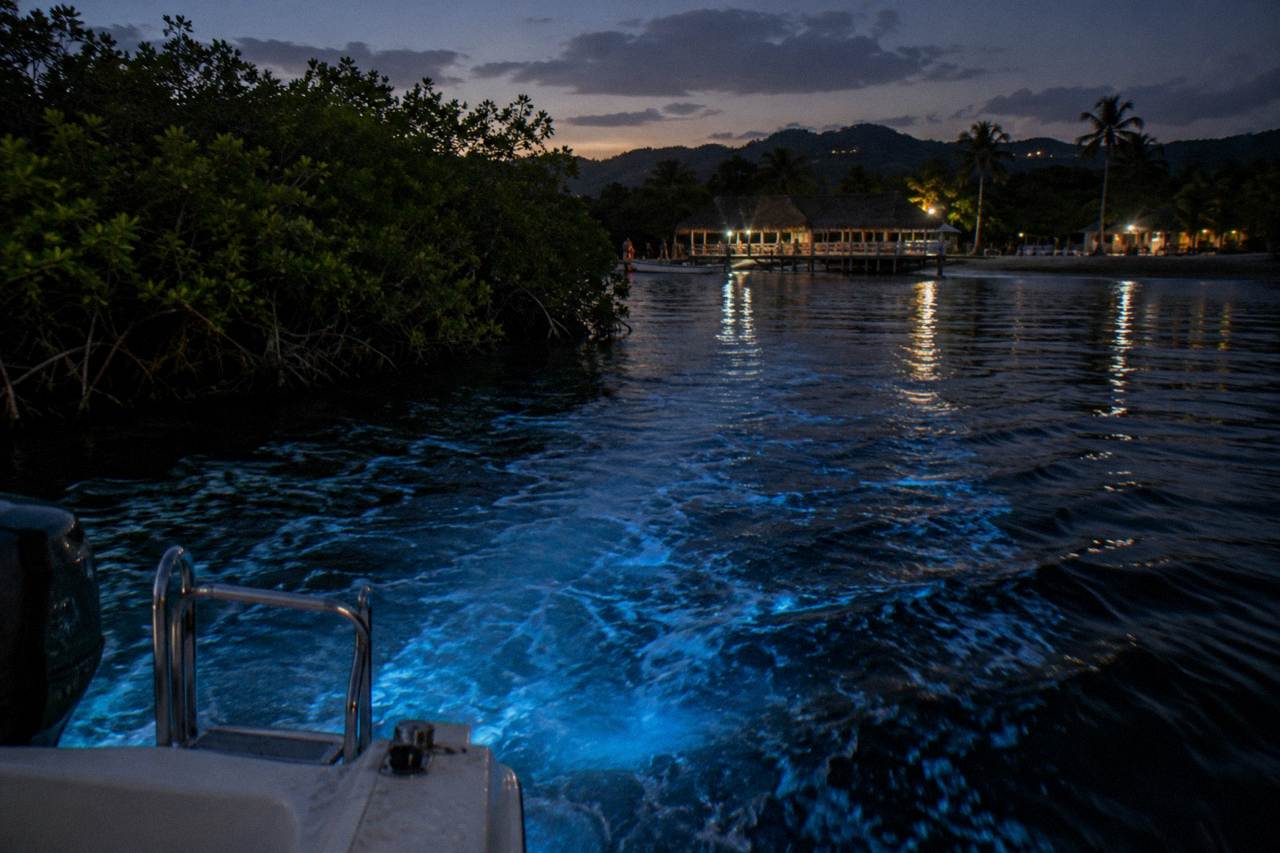
The glow in the Luminous Lagoon never switches off. The dinoflagellates that live where the Martha Brae River meets the Caribbean Sea emit blue-green light whenever the water moves, and tours run from Glistening Waters Marina in Falmouth seven nights a week, weather permitting. What changes is not whether the lagoon glows but how well you see it, and that comes down to three things you can plan around: the month, the moon, and the weather in the days before you go. To see how the calendar and the moon shape the glow, read our month by month guide to bioluminescence in Jamaica.
That distinction matters for booking. Every lagoon trip sold here, from the most reviewed listing, the Mesmerizing Luminous Lagoon (Glistening Waters) Night Tour at 4.5 from 101 reviews, to small private runs, sells the same natural phenomenon, and no operator, however good, can promise a bright night. What you can do is stack the odds: pick a dry-season week, aim within a few days of the new moon, and keep a listing with free cancellation so a storm front does not strand your money. This guide walks through each of those levers in turn, and pairs them with the tours that fit each timing.
What Is The Best Month To Visit The Luminous Lagoon?
The dry season, roughly December through April, is the strongest window, because calm, clear evenings after sunny days show the glow best, while the rainy months of May through November bring cloud, runoff and the chance of storms that can dim or disrupt a tour. Tours run every month of the year, so a summer trip is not a lost cause, it simply carries more weather risk and needs a more flexible booking.
The glow comes from Pyrodinium bahamense, a dinoflagellate recorded at densities as high as 200,000 cells per litre in a 1966 study of the bay. Those organisms recharge on a day-night rhythm, soaking up sunlight by day and flashing brightest after dark when the water is disturbed. That is why operators and guest reports consistently describe warm, calm evenings following sunny days as the strongest displays: the organisms have had a full day of light, and the water is warm and still.
The seasonal overlay is rainfall. Jamaica's dry season runs roughly December to April, and accounts of the lagoon point to that stretch as often yielding the brightest conditions. The Atlantic hurricane season runs June 1 to November 30, with its statistical peak in August through October. Tours still run through those months, and plenty of summer visitors see a good glow, but a passing storm system can cancel a night outright or dump rain that dilutes and cools the brackish water where the organisms live.
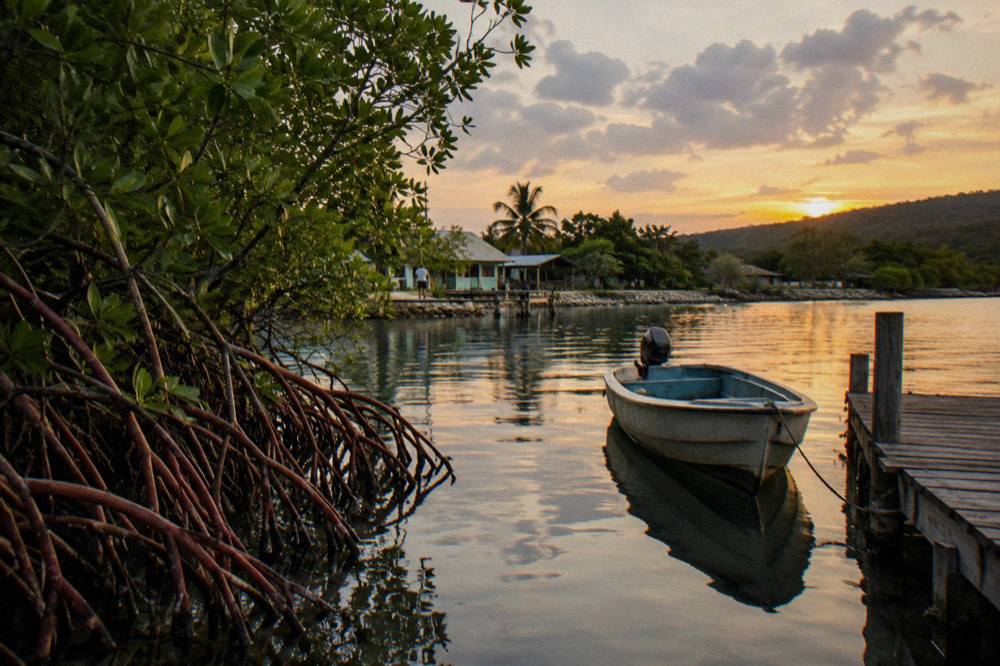
For planning, the month you choose should match how fixed your dates are. Traveling in February with a hotel in Montego Bay? Almost any night works, and the Mesmerizing Luminous Lagoon Night Tour, from $100 per person with hotel pickup and drop-off from Montego Bay hotels, is the most reviewed way to take it. Traveling in late September? Book earlier in your week rather than your last night, so a rained-out departure leaves you a fallback. The deeper moon and timing questions follow.
| Period | Typical conditions | What it means for the glow |
|---|---|---|
| December to April (dry season) | Less rain, more clear evenings | Often the brightest, most reliable window |
| May to July (early wet season) | Afternoon showers, warm sea | Good nights common, check recent rain |
| August to October (storm peak) | Higher risk of systems and swell | Workable but book with free cancellation |
| November (season tapers) | Mixed, improving toward December | Variable, flexible dates help |
Does The Moon Phase Change The Glow At Glistening Waters?
Yes, moonlight is the single biggest factor in how bright the glow looks, not because the organisms dim, but because a dark sky gives the blue light contrast. Operators state the lagoon glows every night; on nights near a full moon the same flash is harder for your eye to pick out, while the nights within about three days of a new moon show it at its most vivid.
This is the point most first-time visitors miss. The dinoflagellates do not take the month off around a full moon. The light is produced when movement disturbs the water, a boat wake, a swimmer's arm, raindrops on the surface, and that chemistry runs nightly. What changes is the backdrop. Under a bright moon the water is already lit, so the blue-green emission has to compete. Under a dark sky the same emission reads dramatically. One recent review of a private listing even advises future guests to check the moon phase before booking, and another notes a near-new moon as the reason a night stood out.
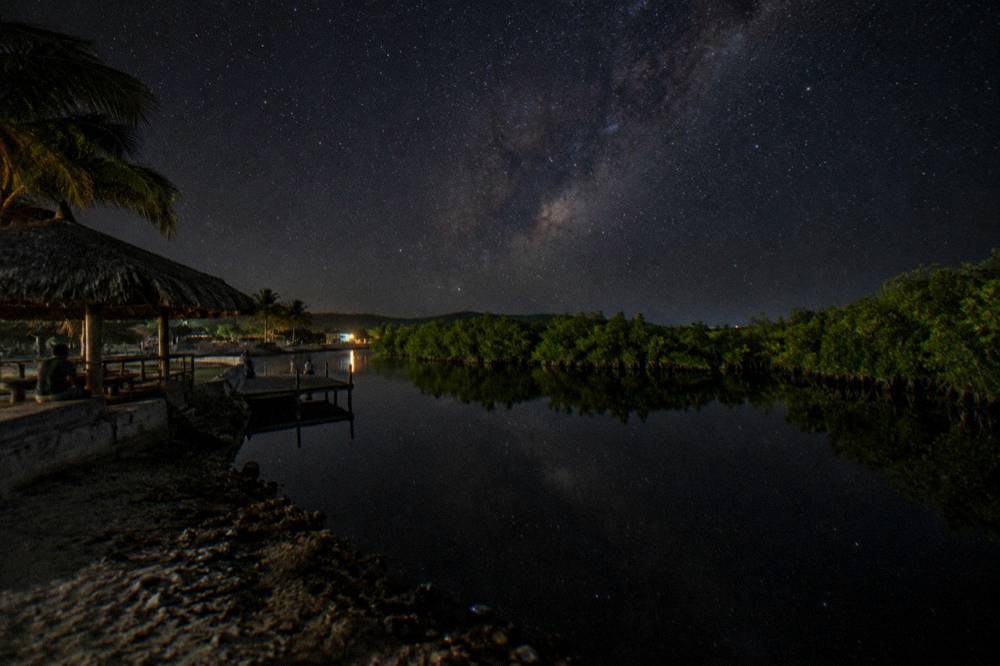
The practical rule is simple: look up the moon phase for your travel window and aim for the new moon, plus or minus about three days, which give the darkest skies and strongest contrast. A full-moon week is not a reason to skip the lagoon, movement still creates visible trails on lighter nights, but it is a reason to book the listing with the best boat and guide rather than the cheapest seat.
The tours themselves differ in how well they suit a dark-night plan. The Mesmerizing Luminous Lagoon Night Tour runs about an hour, from $100 per person, with a 4.5 rating from 101 reviews. The Jamaica: Bioluminescent Lagoon Boat Cruise with Transfers, from $69 per person at 3.9 from 89 reviews, lists swimming, which matters on a dark night because your own movement in the water creates the strongest effect of all. And the Luminous lagoon Dark Night Tour from Ocho Rios and Runaway Bay Hotels leans into the idea in its own name, from $79 per person at 4.5 from 75 reviews. If you want the full breakdown of how moonlight works on bioluminescent bays, the luminous lagoon moon phase guide goes night by night.
Between the moon and the season sits one more timing layer: how the organisms themselves charge. The operator's own scientific page describes the day-night recharge, which is why an evening after a sunny afternoon so often outperforms one after an overcast day, regardless of the calendar month. You cannot control the clouds, but you can avoid booking the one free night of your vacation without checking whether a brighter option exists two days later.
What Time Of Night Do Luminous Lagoon Tours Depart?
Boats leave Glistening Waters Marina daily starting at sunset, with typical evening departures around 6:30 PM in winter and closer to 7:15 PM in summer, and roughly 35 to 45 minutes on the water per departure, so the whole lagoon portion of most evenings wraps up well before 9 PM.
The sunset start is not a stylistic choice. The glow is invisible in daylight, and the first departures go out once the sky is dark enough for the blue-green light to register. Because sunset shifts through the year in Jamaica, your pickup time shifts too: plan around the listing's confirmed pickup time. The listing's stated total duration usually includes the drive, which matters when you compare products. A one-hour listing from Montego Bay is not a one-hour boat ride; the marina sits roughly 30 minutes east of Montego Bay per the operator's directions page, so much of that hour is transit each way.
| Departure point | Approximate drive to the marina | Listings that state it |
|---|---|---|
| Montego Bay hotels | Roughly 30 minutes east | Mesmerizing Night Tour, Bioluminescent Boat Cruise with Transfers, others |
| Ocho Rios hotels | Roughly an hour | Dark Night Tour from Ocho Rios and Runaway Bay |
| Negril hotels | About 2 hours | Glistening Waters Tour From Negril Hotels/Airbnb |
| Falmouth itself | Minutes, local transfer | Falmouth departures and port-area listings |
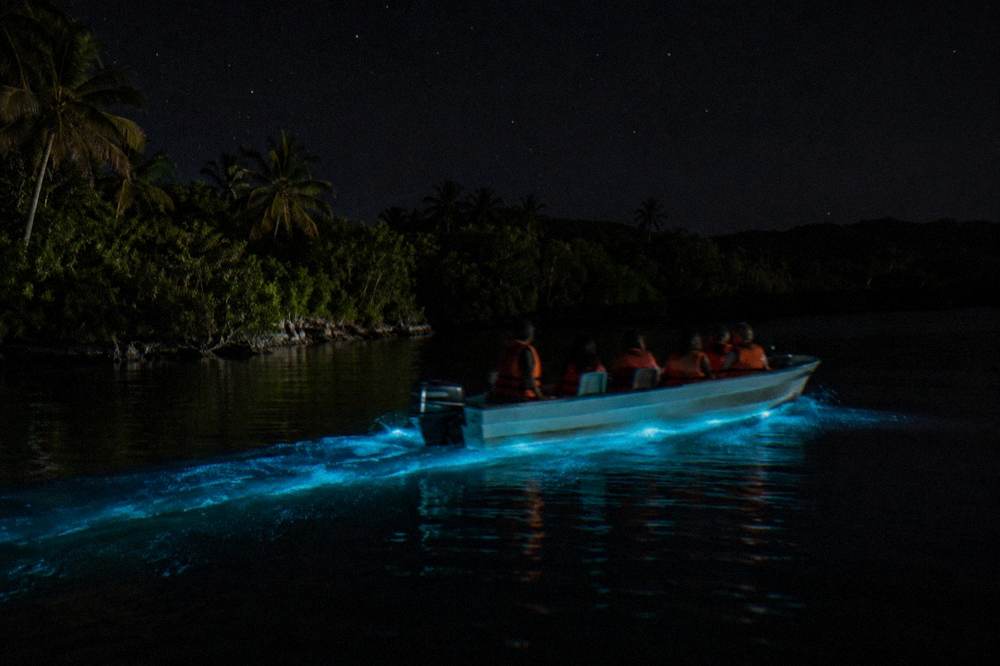
Timing your dinner around the tour is a real consideration. The marina's own restaurant serves daily, so you can eat before or after the boat. Among the listings covered here, dinner is generally not included; most lines list food and drinks as exclusions, with meals available to purchase at the marina. Check the inclusions on your specific listing before assuming anything about the table. For the full picture on costs, the luminous lagoon price and tickets guide breaks down what each departure area charges.
One group with a genuinely hard time constraint is cruise passengers. Scheduled calls at the Falmouth cruise port mostly end mid-afternoon, with October 2026 timetables showing departures between 15:00 and 16:45, so an after-dark lagoon boat normally does not fit a port day; check your ship's all-aboard time before counting on anything at night. The falmouth cruise port guide covers what does fit a call.
Does Rain Ruin The Luminous Lagoon Experience?
Heavy or recent rain can dim the glow by diluting the dinoflagellates and cooling the water, and storms can cancel departures outright, but a passing shower on an otherwise calm night often does not, and raindrops hitting the surface create their own small flashes. The risk is sustained upstream rain, not every cloud.
The mechanism is worth understanding because it tells you which forecasts to watch. The lagoon is brackish, a mix of Martha Brae River freshwater and Caribbean seawater, and that mix is what the organisms thrive in. A big rain event pushes extra freshwater and sediment downriver, thinning the population in the bay and dropping the water temperature. Guides and guest reports describe those post-flood nights as noticeably weaker. A brief evening shower, by contrast, leaves the population intact, and each drop that strikes the water triggers a pinpoint flash, which the operator describes as its own visual effect, separate from the overall intensity. More of these guides are collected on Luminous Lagoon Jamaica Tour.
Booking strategy follows directly. Watch the rain forecast for the Martha Brae watershed, not just Falmouth itself, in the two or three days before your tour. Every listing covered here states free cancellation on its own line, so if a tropical wave is sitting on the island, you can usually rebook rather than gamble a night. And keep your tour early in your stay, not on your final evening, so a washout has a fallback slot.
| Condition | Effect on the glow | Best response |
|---|---|---|
| Sunny day, calm clear night | Organisms fully charged, dark backdrop | Ideal, book it |
| Brief evening shower | Little change, raindrop flashes add effect | Go, bring a light rain layer |
| Day or two of steady rain | Dilution and cooler water, dimmer glow | Consider rescheduling if dates allow |
| Major storm or flood event | Departures may cancel, glow weak | Rebook, use free cancellation |
Is Hurricane Season A Bad Time For A Falmouth Lagoon Tour?
It is riskier, not impossible: hurricane season runs June 1 to November 30 with the statistical peak from August to October, and while tours run all summer, a storm system can cancel nights or dim the water for days afterward, so summer bookings need flexible dates and a free-cancellation listing more than a February booking does.
Falmouth's location helps in one respect. The town sits on Jamaica's north coast, and the lagoon is a shallow, sheltered estuary behind the marina. The genuine disruption risk is a named system: when one approaches, boats stay in, roads close, and the days after landfall can carry floodwater down the Martha Brae. The island's road authority reported weather-related closures on north-coast routes as recently as late October 2026, a reminder that the drive itself, not just the boat, is part of the timing question.
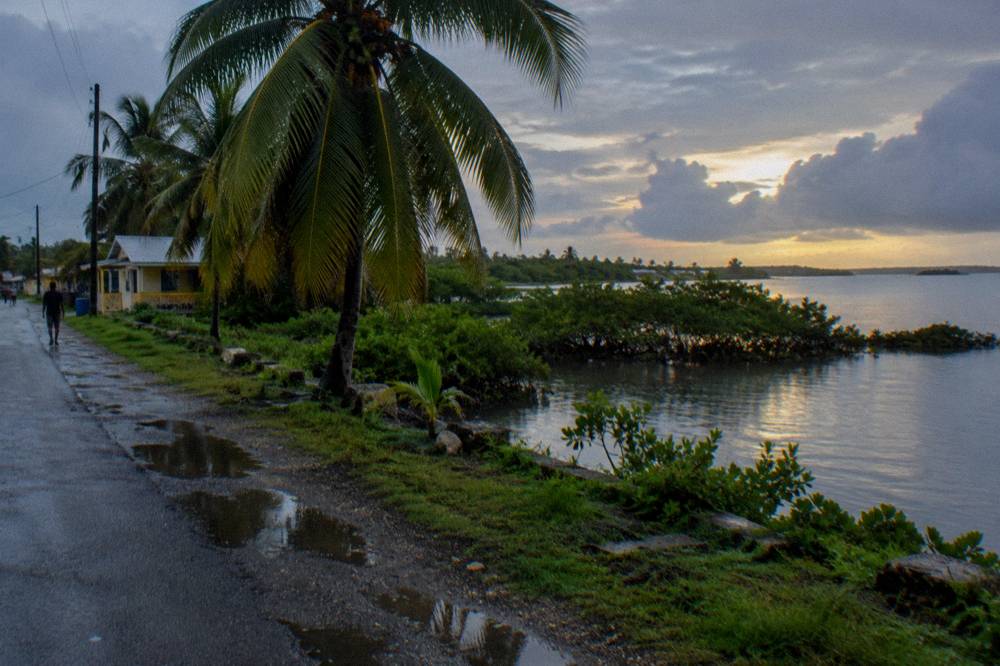
If summer is when you travel, the levers still work. Check the moon first, then the weather, then book the earliest viable night of your stay. The From Montego Bay: Luminous Lagoon Nighttime Boat Tour, from $123.41 per person, states Montego Bay hotel pickup and drop-off and entry tickets included, and free cancellation, which is exactly the profile you want when a forecast might move. Travelers staying farther east can read the luminous lagoon from Ocho Rios guide for departure-area specifics, since that drive is roughly an hour.
One honest note on promises: no listing here, and no operator anywhere, guarantees glow intensity on a given night, and no listing offers a glow-specific refund. Standard free-cancellation terms cover a change of plans made in time, not disappointment. The right response is not to demand a guarantee but to pick the night and the listing that make a good outcome most likely, and to treat anything extra as a bonus.
Which Night Of Your Jamaica Trip Should You Book The Lagoon?
Book your lagoon night in the first half of your stay, ideally within three days of a new moon, on an evening with a clear forecast after a sunny day, using a listing with free cancellation so a washout, a late flight or a schedule change does not cost you the fare. Booking your last night leaves no room to retry.
This is where all three levers combine, and it is the single most useful piece of advice on this page. A family arriving Saturday for a week should scan the moon calendar and the forecast on day one, pick the best-fitting night around Tuesday or Wednesday, and hold it. If Tuesday turns wet, Wednesday is still open. The traveler who books the final Friday has one shot, and if the sky or the sea disagrees, the trip ends without the glow.
The choice of listing should follow the same logic. The Mesmerizing Luminous Lagoon Night Tour, 4.5 from 101 reviews and from $100 per person, is the most reviewed option from Montego Bay hotels, with free cancellation stated and up to 25 guests per departure. The Jamaica: Bioluminescent Lagoon Boat Cruise with Transfers, from $69 per person at 3.9 from 89 reviews, runs 1.5 to 2 hours with round-trip Montego Bay-area transfers and a listed swim stop. From Ocho Rios and Runaway Bay hotels, the Dark Night Tour, from $79 per person at 4.5 from 75 reviews, includes the entrance ticket and runs about 3 hours door to door. We compared these and the rest of the listings in the lagoon tours comparison, which is the right next stop if timing is settled and the choice of tour is not.
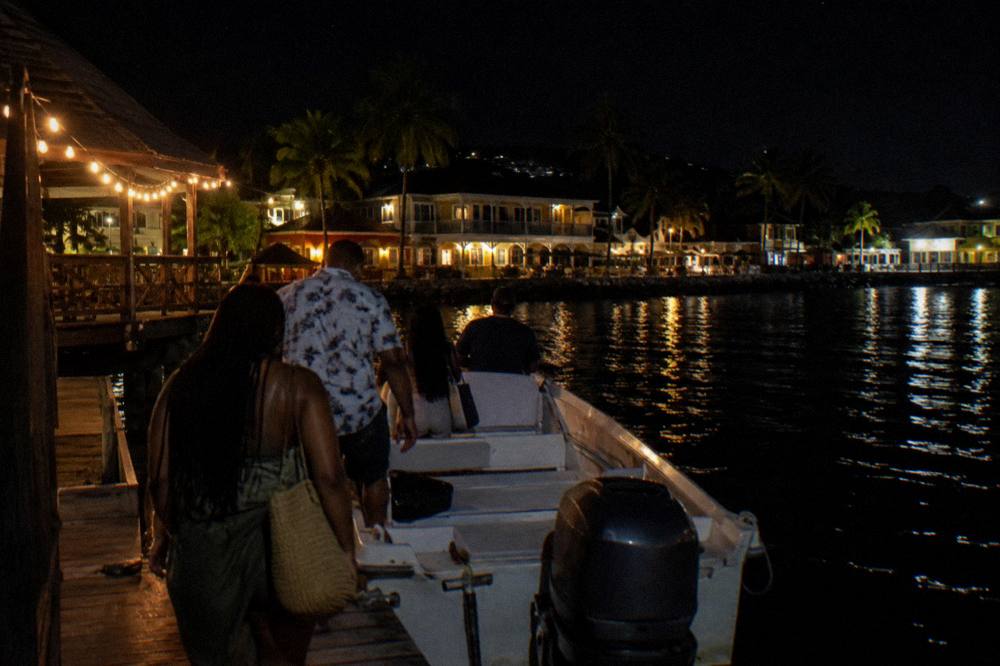
Private options suit a different kind of timing: a couple or group that wants its own vehicle and pickup time. The Private Tour from Ocho Rios Runaway Bay to the Luminous Lagoon, from $85 per person and 5 from 90 reviews, includes the entry fee and bottled water for up to 15 guests. Its reviews are strong enough that it earns its rating, and pickup from Ocho Rios or Runaway Bay hotels is stated, with timing confirmed on the listing.

Reading the chart plainly: the moon dominates, the season stacks on top of it, and rain is the wildcard that can override both. Nothing on it promises a spectacle on any single night; it shows where the odds concentrate, which is all any honest timing advice can do. For what to pack once the night is picked, including swimwear and a towel as the operator states, see the luminous lagoon what to wear and bring guide.
One final planning note for readers who land on this page while building a whole Jamaica itinerary: the lagoon pairs naturally with daytime Falmouth-area attractions, and the things to do in Falmouth guide maps the area around the marina. Timing the glow well is a two-hour decision inside a bigger week, and it is the easiest one to get right.
Common Questions About The Best Time To Visit The Luminous Lagoon
What Is The Best Time To Go To The Luminous Lagoon?
Dry season, December through April, on a calm night within about three days of a new moon. Tours run year-round from Glistening Waters Marina, so the honest answer is the best time is the driest, darkest night your travel dates allow.
What Time Do Luminous Lagoon Tours Start?
Departures begin daily at sunset, typically around 6:30 PM in winter and 7:15 PM in summer, with roughly 35 to 45 minutes on the water. Your hotel pickup time depends on your departure area and the listing.
Does A Full Moon Ruin The Luminous Lagoon?
It dims the contrast, not the organisms. The lagoon glows every night, but under bright moonlight the blue-green light is harder to see. Nights near the new moon give the most vivid displays.
Can You See The Luminous Lagoon In The Rain?
A brief shower usually does not stop a tour, and raindrops flashing on the water are their own effect. Sustained or upstream rain dilutes and cools the lagoon and can dim the glow for days, and storms cancel departures outright.
Is The Luminous Lagoon Good In Summer?
Yes, with caveats. Tours run all summer and plenty of visitors see strong glows, but hurricane season runs June 1 to November 30, so book early in your stay with a free-cancellation listing and watch the forecast.
Do Operators Guarantee The Glow?
No. Glow strength varies with moon, rain and season, and no listing covered here promises intensity or offers a glow-specific refund. Free cancellation on each listing covers weather and similar reasons, so use it if a storm moves in.