Photographing The Luminous Lagoon: What Phones And Cameras Capture
The glow at Glistening Waters is real, but it is also dim, moving, and hostile to ordinary cameras. Here is what phones and cameras actually capture on a Luminous Lagoon night, and how to give yourself the best odds.
Short answer
Most phone photos of the Luminous Lagoon disappoint because the blue-green glow is faint and moving, and the operator bans flash. A camera with manual long exposures and a tripod works best; phones are not promised to capture the glow at all. Book a dark, moonless night and manage expectations.
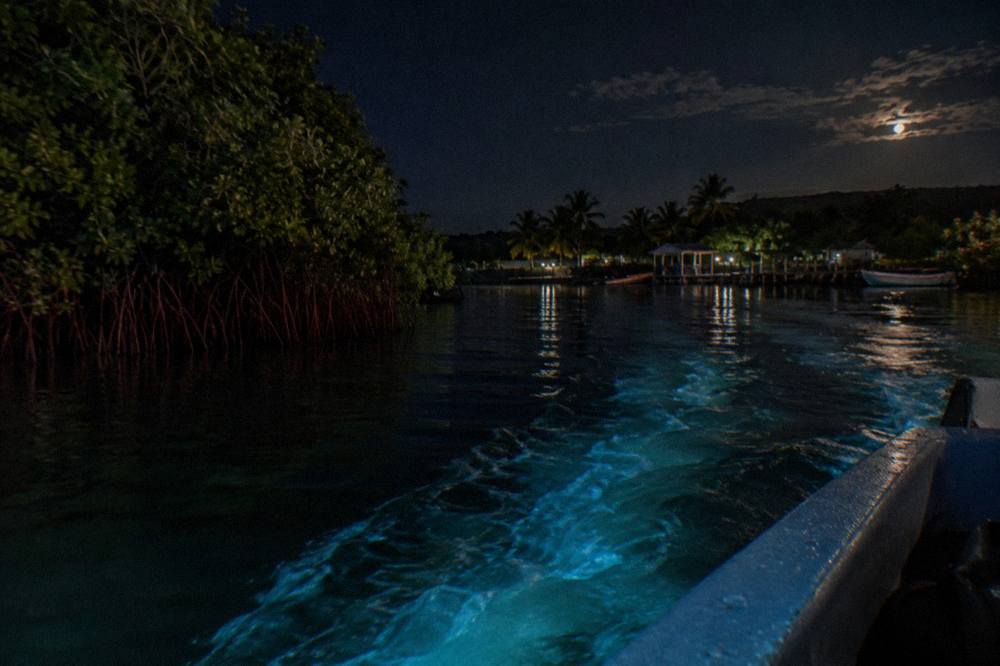
The glow in the Luminous Lagoon at Glistening Waters, near Falmouth in Trelawny, is produced by dinoflagellates called Pyrodinium bahamense, microscopic organisms that emit blue-green light when the water around them is disturbed. A Johns Hopkins study of the bay, published in the Journal of Marine Research in 1966, measured densities as high as 200,000 cells per litre and found the emission peaks at 476 nanometres, squarely in the blue-green range human eyes handle well and phone sensors handle badly. That single mismatch explains most of the disappointment in lagoon photography, and this guide works through the rest: what gear actually records the glow, which tours give you the time and darkness to try, and how the moon quietly decides your results before the boat ever leaves the dock.
Why Do Luminous Lagoon Photos Look Better In Person Than On Camera?
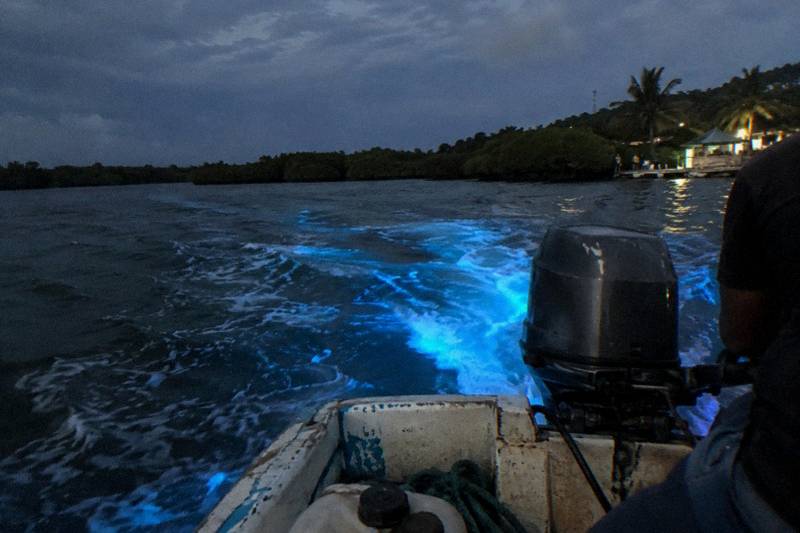
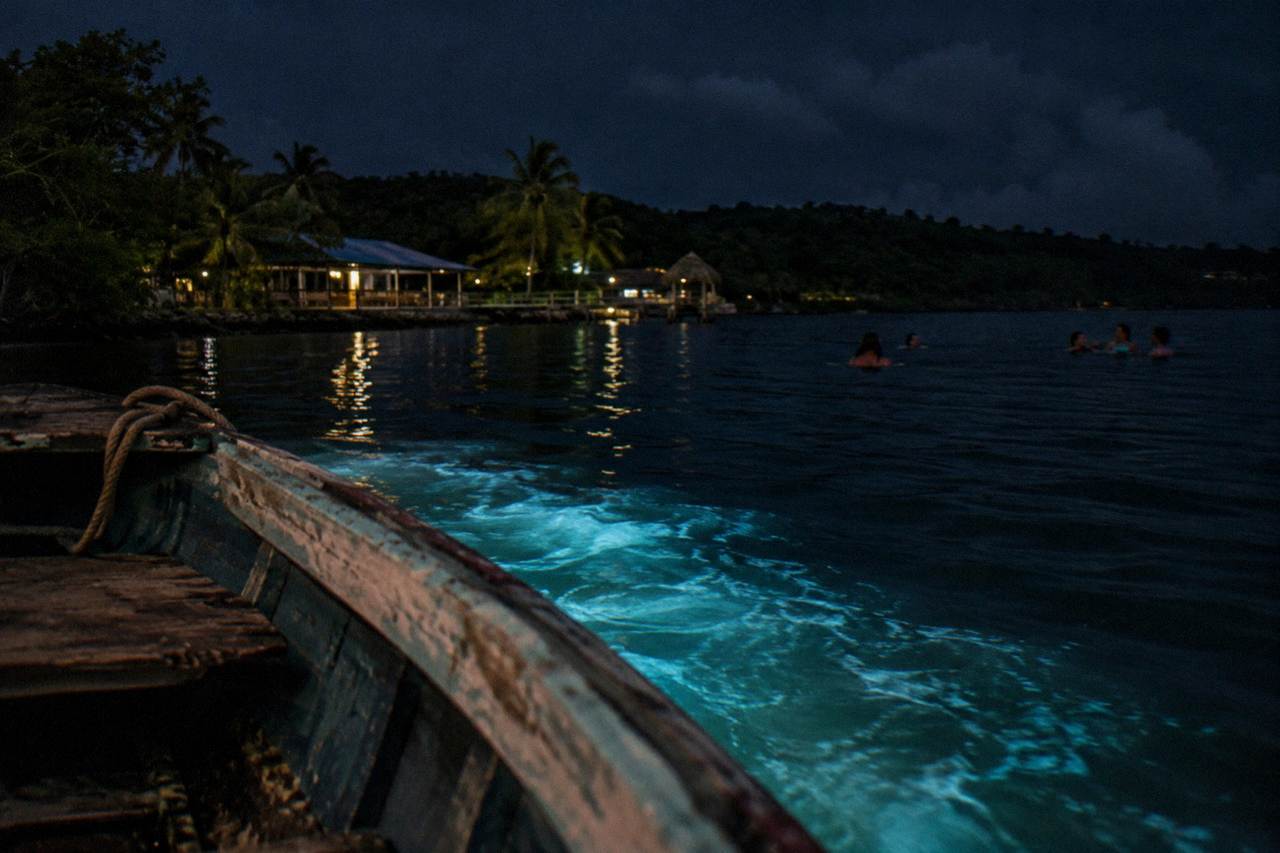
Your eyes adjust to darkness over several minutes and see the glow as bright, flowing light, while a camera shooting an automatic night mode sees a near-black scene with faint, fast-fading streaks it cannot expose for. The operator states plainly that no flash is allowed on the lagoon, because flash and other bright light destroy both the ambience and the visibility of the glow.
The gap between eye and sensor is not a Jamaica problem or a tour problem. It is physics. The light is emitted in tiny flashes triggered by mechanical disturbance: a boat wake, a hand moving through water, a swimmer's stroke. Each flash lasts a fraction of a second, and the total light arriving at your lens is tiny compared with any scene a phone's auto mode is built for. Your visual system compensates by adapting; the camera does not, unless you take manual control and hold the shutter open for seconds at a time.
Guests report the same thing across the listings covered here. The water looks spectacular from the boat, they reach for a phone, and the result is a dark rectangle with maybe a smudge of blue. The listing for the Mesmerizing Luminous Lagoon (Glistening Waters) Night Tour, the most reviewed lagoon trip from Montego Bay hotels at 4.5 from 101 reviews, from $100 per person with hotel pickup and drop-off included, describes the boat ride and the swim, not a photography session, and that is the right frame to bring.
That does not mean photos are impossible. It means the default plan, point a phone at the water and tap, is the one plan guaranteed to fail. The rest of this guide is about every other plan: manual settings, the right night, the right tour format, and the option of letting the operator's photographer do the work.
What Camera Settings Actually Work For Bioluminescence?
A manual long exposure is the only reliable recipe: a DSLR or mirrorless camera, a wide maximum aperture, exposures of several seconds at a high ISO, no flash ever, and something to steady the camera, because the boat and the water both move. The operator's own guidance says no flash and that a DSLR works best on the lagoon.
Start from the operator's line and build on it. the operator's tour page states the no-flash rule and recommends a DSLR. The reason flash fails twice over: it wrecks your night vision and everyone else's, and it lights the scene so the camera exposes for the flash and records none of the glow. Turn flash off, and while you are at it, follow the practical advice repeated across visitor guides: screens and lights must stay off on the lagoon, because ambient light reduces the visibility of the glow for the whole boat.
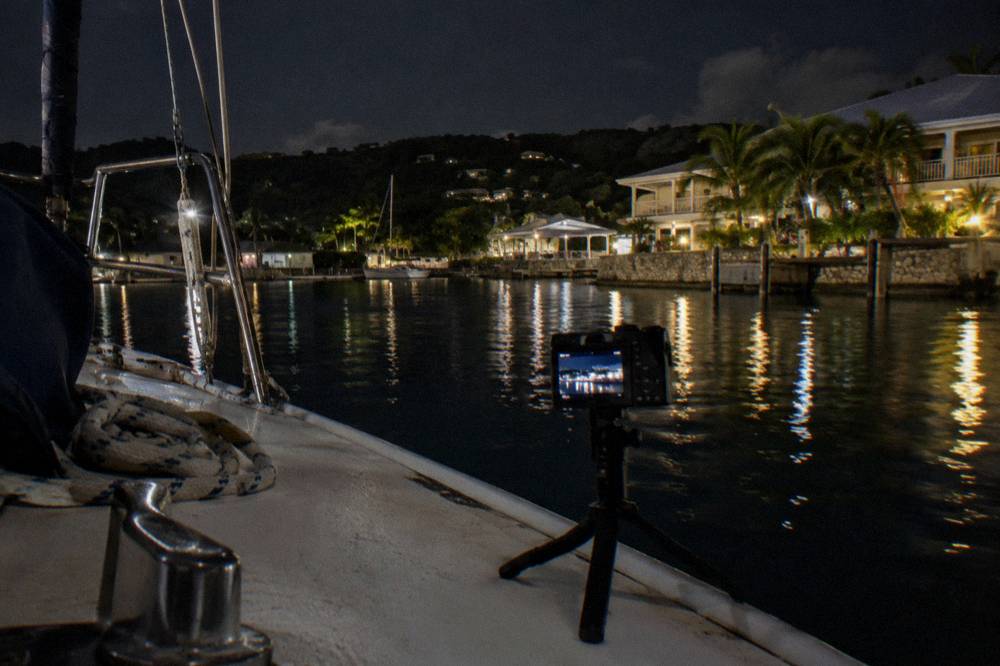
Concretely, the settings that record bioluminescence look like this: aperture as wide as the lens allows, ISO high enough to register faint light without drowning the frame in noise, and shutter speeds in the range of a few seconds, which only works with steady support and a cooperative sea. Every variable fights you on a boat. A monopod braced against the rail, or a companion holding the camera dead still, beats handheld every time. Video is harder still: most phone video records at fixed fast shutter speeds and will show nothing but black water, so if video is the goal, plan on a camera that shoots manual video with high gain, and treat any result as a bonus.
Phones are not hopeless, but be honest about the ceiling. A recent flagship in dedicated night mode, braced against the rail, pointed at a strong wake trail on a very dark night, can produce something. The operator does not promise phone results, and neither does this site. If the photo matters more than the experience, the professional route exists: several listings note souvenir photos available to purchase on site, which we cover in full later in this guide, in the section on the operator's photos, so we do not repeat the details here.
| Gear | What it realistically captures | Main limitation |
|---|---|---|
| Phone, auto mode | Almost nothing; dark water, maybe a faint smudge | Auto exposure cannot handle the scene |
| Phone, night mode, braced | A usable wake trail on a dark night | Motion blur, no control over shutter |
| Mirrorless or DSLR, manual, wide aperture | Clean blue-green trails and swimmer silhouettes | Needs steady support and seconds-long exposures |
| Action camera | Rarely anything usable | Fixed auto exposure, tiny sensor |
| Operator's souvenir photographer | Reliable images of your swim | Costs extra, on select listings |
For readers who want the deeper background on why the glow behaves the way it does, the 1966 Journal of Marine Research study of the Falmouth bay is the primary source behind the emission and density figures above, and our guide to how bioluminescence works in the lagoon translates it into plain English.
Which Luminous Lagoon Tours Give You The Best Shot At Photos?
For photography, you want the longest on-water time, a swim stop for close-up disturbance, and a departure timed after full darkness. The Explore Montego Bay to Luminous Lagoon Night Tour, 4.5 from 78 reviews from $90 per person, lists a swim and a roughly 20-minute round-trip boat ride; the Mesmerizing tour, 4.5 from 101 reviews from $100, runs about an hour total with hotel pickup from Montego Bay.
Duration claims deserve a careful read, because a listing's total duration often includes the drive, not just the boat. The on-water portion of the standard operator tour runs roughly 35 to 45 minutes at sunset, per the operator and visitor guides, so a one-hour listing from Montego Bay is mostly transfer time. For a photographer, that 35 to 45 minute window is the whole shoot: arrive with settings already dialed, because you will not have time to experiment on the water.
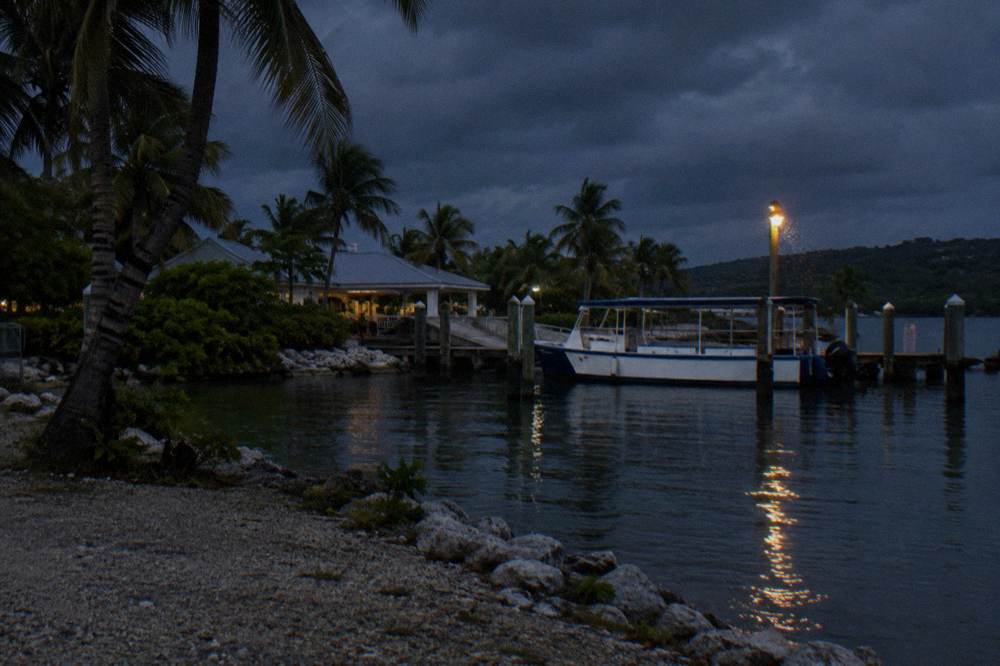
From Montego Bay hotels, the strongest photographic picks pair a swim flag with a workable schedule. The Explore Montego Bay to Luminous Lagoon Night Tour lists hotel pickup and drop-off, a swim, and free cancellation, from $90 per person. The Mesmerizing Night Tour, the most reviewed listing on this route, includes hotel pickup and drop-off and carries up to 25 guests. If drinks matter for the wait at the dock, the Bioluminescent Lagoon Tour: Night Swimming and Liming in Jamaica, 4.5 from 63 reviews from $80 per person, lists alcoholic beverages and a swim, up to 60 guests. Budget matters too: the From Montego Bay: Luminous Lagoon Boat Tour with Transfer lists a swim and hotel transfer from $61.57 per person, rated 3.8 from 16 reviews.
From the Ocho Rios and Runaway Bay side, the Luminous Lagoon Dark Night Tour from Ocho Rios and Runaway Bay Hotels earns its name: 4.5 from 75 reviews, from $79 per person, three hours total, hotel pickup included, up to 15 guests, a smaller boat load that photographers tend to appreciate. Private options change the equation again. The Private Tour from Ocho Rios Runaway Bay to the Luminous Lagoon, 5 from 90 reviews from $85 per person with entry fee and bottled water included, caps at 15 guests and gives you more control over pacing, which matters when you are balancing a camera and a swim.
| Listing | From | Rating | Total duration | Swim listed | Photo-relevant note |
|---|---|---|---|---|---|
| Mesmerizing Luminous Lagoon Night Tour (Montego Bay) | $100 per person | 4.5 from 101 reviews | 1 hour | Not stated | Most reviewed; pickup included; up to 25 guests |
| Explore Montego Bay to Luminous Lagoon Night Tour | $90 per person | 4.5 from 78 reviews | 1 hour | Yes | Lists a 20-minute round-trip boat ride |
| Night Swimming and Liming (Montego Bay) | $80 per person | 4.5 from 63 reviews | 1 hour 30 minutes | Yes | Drinks listed; up to 60 guests |
| From Montego Bay: Lagoon Boat Tour with Transfer | $61.57 per person | 3.8 from 16 reviews | 3 hours | Yes | Life jackets listed |
| Dark Night Tour from Ocho Rios and Runaway Bay | $79 per person | 4.5 from 75 reviews | 3 hours | Not stated | Up to 15 guests; pickup included |
| Private Tour from Ocho Rios Runaway Bay | $85 per person | 5 from 90 reviews | 2 hours | Not stated | Entry fee included; up to 15 guests |
If you're bringing children along, the guide to the Luminous Lagoon with kids covers age suitability, bedtime timing and which departure areas suit families.
Photography is one more reason the format choice matters. A shared boat gives you the crowd's wakes and splashes, plenty of disturbance to shoot. A private tour gives you fewer strangers in frame and, on several listings, WiFi on board for the ride, though the World Famous Luminous Lagoon Night Tour with Transportation, from $79 per person, 4.5 from 22 reviews, is the listing that actually advertises it; the Big Deal Tours boat tour and swim, from $55 per person with entry included, also lists WiFi and bottled water. Neither WiFi claim helps on the water, where screens go dark, but it eases the transfer.
Does The Moon Phase Change Your Lagoon Photos?
Yes, and more than any gear choice you can make. Operators and visitor guides agree the glow is present every night but appears far brighter under dark skies; new moon windows, roughly the new moon plus or minus three days, give the strongest contrast, while full moon nights and heavy recent rain both dim what you and your camera can see.
The mechanism is contrast, not chemistry. The dinoflagellates glow at the same brightness regardless of the moon; what changes is how much moonlight is competing with that faint blue-green emission. On a dark night the glow reads as vivid light trails. Under a full moon the same glow is washed out, harder for eyes and much harder for sensors already struggling with the exposure. Guest reviews of the private Montego Bay listings say the same thing in their own words, one urging future visitors to check the moon phase, another noting the moon was almost new on their night. Heavy or recent upstream rain also dims the effect by diluting and cooling the water.
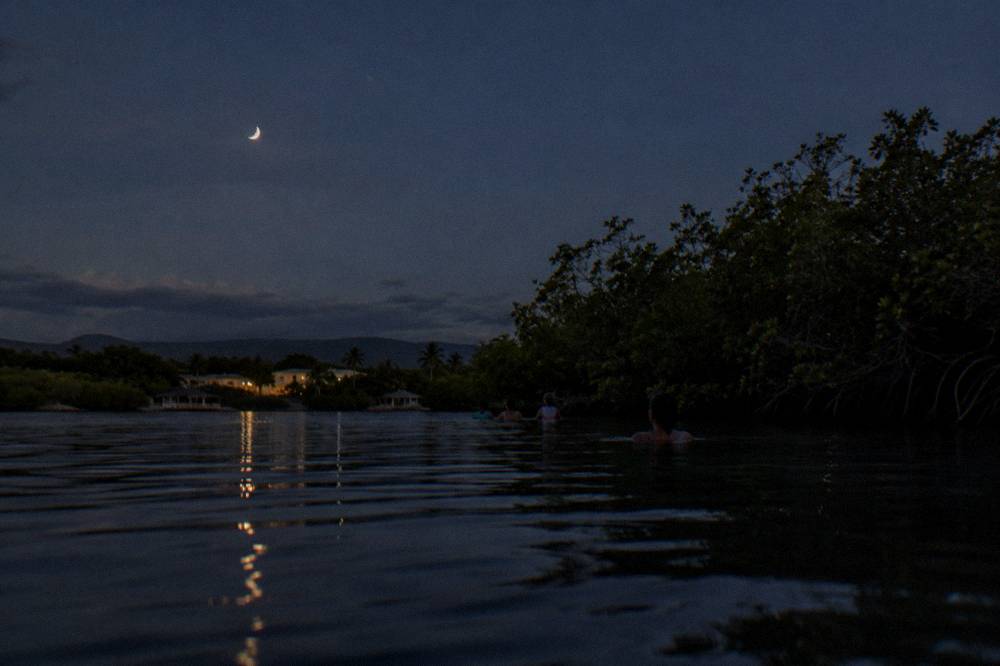

For planning, this means the calendar comes before the camera bag. Tours run year-round from Glistening Waters Marina, weather permitting, departing at or after sunset, with typical evening starts around 6:30 PM in winter and closer to 7:15 PM in summer, per operator-linked guidance. Dry season, roughly December through April, is often cited by travel writers as yielding the brightest conditions, and hurricane season runs June through November, so late-year bookings carry a small weather risk. If your dates are fixed and they land near a full moon, go anyway, guests still report visible trails, just set photo expectations accordingly and prioritize the swim. If your dates are flexible, shift them.
Our full moon phase guide for the lagoon walks through the astronomy in more depth, and the best time to go guide covers season and weather trade-offs. For a broader look at what the site recommends by departure town, start with the Luminous Lagoon Jamaica Tour homepage comparison.
| Night condition | Glow visibility | Camera odds | Note |
|---|---|---|---|
| New moon, plus or minus 3 days | Strong contrast, vivid trails | Best window | Book these dates first |
| Quarter moon | Moderate | Workable with long exposures | Solid compromise |
| Full moon | Glow washed out | Poor | Rain checks and shifts help |
| After heavy rain | Diluted, dimmer | Poor | Effect may recover within days |
| Calm, clear night after sunny days | Often strong | Good | Operator-favored conditions |
Can You Swim And Photograph The Glow At The Same Time?
Realistically, no, and trying to do both at once is the fastest way to end up with wet gear and no photos. Swimming produces the strongest glow of the night, right around your body, but you cannot hold a camera steady in the water; the standard play is to shoot the swimmers from the boat, or swim first and shoot fellow guests after.
The swim is where the lagoon shows off. Disturbance is what triggers the light, and a swimmer moving through the water creates far more of it than a boat wake. Every swim-flagged listing, from the Explore Montego Bay tour to the From Montego Bay: Luminous Lagoon Boat Tour with Transfer, sells that moment. The water is warm and shallow, reported by the operator at about 3 to 8 feet, or more, and a tourist-board-linked figure runs about 3 to 4 feet with 8 at the deepest. Non-swimmers and anyone who prefers to stay aboard can do so, and the boat remains the best platform for photographs.
If the swim is your priority and you also want images, split the party or split the session. One companion stays dry with the camera while the other swims, then swap; the second swimmer photographs an equally good show, because the glow does not run out. Bring swimwear and a towel, as the operator states, and note the practical advice from visitor guides: wear a dark swimsuit, since the brackish water can stain lighter colors, and bring water shoes for the soft lagoon floor. Changing rooms are available at the marina. Life jackets are listed on the From Montego Bay transfer tour, and swimming is optional on every listing where it appears.
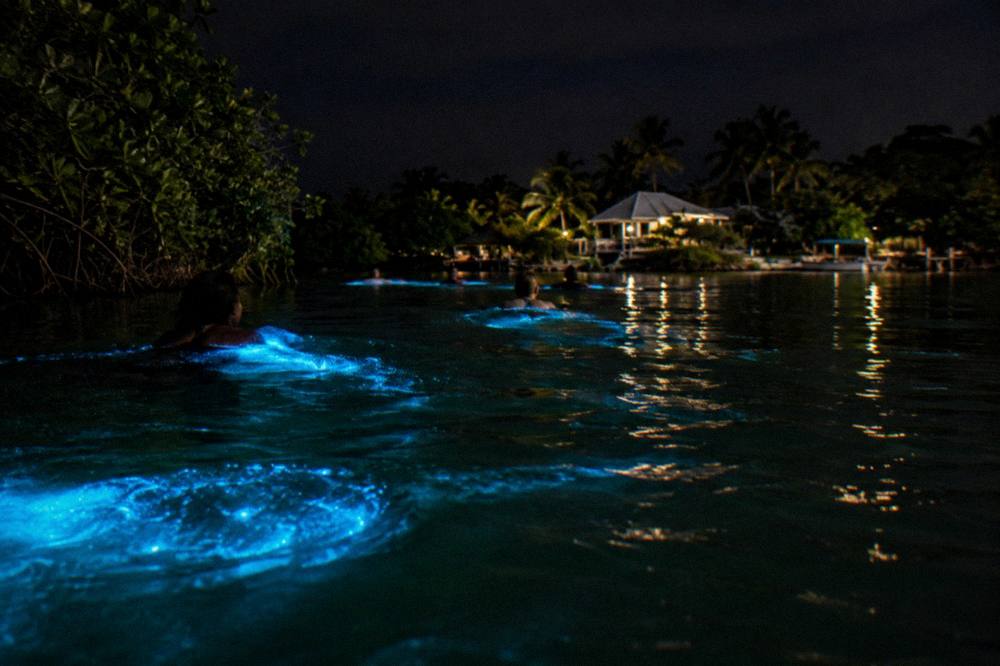
There is one more reason not to fight for the perfect in-water selfie: it cannot work. A phone held at arm's length needs light your body is actively producing behind the lens, not in front of it, and the front camera is the weakest sensor in the device.
For everything on the water side, our guide to swimming in the lagoon covers depth, conditions and what to expect.
What Should You Pack For A Luminous Lagoon Night Photo Trip?
Pack like a night photographer, not a beachgoer: your camera and its steadiest support, spare batteries drained fast by long exposures, a dark towel, water shoes, insect repellent applied before boarding, and swimwear if your listing includes the swim, plus cash or a card for optional souvenir photos at the marina.
The packing list for this trip is short but unforgiving, because you are standing on a boat in the dark and anything you drop is gone. Batteries deserve their own line: long exposures and live view drain a camera far faster than daylight shooting, and there is no charging on the water. A small towel for your hands matters more than it sounds, since wet fingers and camera controls do not mix, and the operator's advice to bring a towel doubles for the swim.
| Item | Why it matters for photos | Operator or guide basis |
|---|---|---|
| DSLR or mirrorless camera, wide lens | The operator states a DSLR works best | Operator tour page |
| Steady support: monopod or braced companion | Seconds-long exposures need it | Standard low-light practice |
| Spare batteries and cards | Long exposures drain power | Standard practice |
| Dark swimsuit and towel | Brackish water can stain light colors; swim listed | Visitor guides; operator |
| Water shoes | Soft, muddy lagoon floor | Visitor guides |
| Insect repellent, applied early | Mosquitoes at night; avoid fresh chemicals before swimming | Visitor guides |
| Cash or card for souvenir photos | Optional purchase on select listings | Listing exclusions |
Two rules protect everyone's night and belong on the list as behavior, not gear: flash stays off, and screens stay dark or dimmed on the water, because ambient light cuts the glow's visibility for the entire boat. Bug spray deserves a small caution from the visitor guides as well: apply it before the tour rather than immediately before swimming, to avoid washing chemicals into the water the organisms live in.
Is It Worth Buying The Operator's Photos Of Your Lagoon Swim?
For most travelers, yes, because it is the only reliable way to get an image of your own swim. Several listings explicitly list souvenir photos as an excluded extra, available to purchase on site, which confirms a professional photographer works the swim; the photos cost extra and availability is per listing, so check before you count on it.
Read the exclusions columns carefully and the pattern is clear. The Mesmerizing Night Tour's exclusions list gratuities only, but the From Montego Bay transfer tour lists photos of your experience as available to purchase on site, and the Glistening Waters tour from Montego Bay Hotels lists souvenir photos available to purchase along with DVDs. The exclusions tell you the service exists and that it is not bundled into the ticket. A photographer who shoots the lagoon every night, in the exact light, with the exact gear the conditions demand, will out-shoot almost any guest carrying a phone, and the transaction is painless if you decide the memory is worth it.
Treat it as insurance rather than a plan. Buy the operator's frames of your swim, attempt your own long exposures from the boat, and whichever works, the night was never really about the image. The glow is there most nights, strongest in the dark, and no photograph yet made reproduces the feeling of water lighting up around your own hands.
The wrap-up on strategy: pick a night inside the new moon window if you can, book a listing with a swim and a schedule you can shift, pack the camera and its support, leave the flash at home, and give the professional at the dock a chance to save the memory. The listings compared above all state free cancellation, so a moon-phase surprise costs you nothing but a rebooking.
Common Questions About Photographing The Luminous Lagoon
Can A Phone Capture The Luminous Lagoon Glow?
Not reliably. The operator does not promise phone results and recommends a DSLR instead. A recent phone in night mode, braced against the rail on a very dark night, can sometimes record a wake trail, but plan on the experience being the souvenir and treat any phone image as a bonus.
Is Flash Allowed On The Luminous Lagoon Boat Tour?
No. The operator states that flash photography is not allowed, and visitor guides add that screens and lights must stay off on the lagoon because ambient light reduces the visibility of the glow for the whole boat.
Does The Moon Phase Really Affect Lagoon Photos?
Yes, it is the single biggest factor you control. The glow occurs every night, but contrast is far stronger on dark, moonless nights; new moon windows of roughly plus or minus three days give the best viewing and shooting conditions, while full moon and recent heavy rain both dim the effect.
Can I Buy Photos Of My Swim Instead Of Taking My Own?
On many listings, yes. Several tours list souvenir photos as an available-to-purchase extra on site, which means a professional shoots the swim and sells the images afterward. It is excluded from the ticket price, so budget for it separately.
What Camera Settings Work For Bioluminescence?
Manual mode with the widest aperture your lens allows, a high ISO, and multi-second exposures, with the camera steadied against the boat rail or on a support. Automatic modes will render black water. No flash, ever.
Which Tour Is Best For Photography At The Luminous Lagoon?
Photographers tend to favor smaller guest counts and listed swims. The Dark Night Tour from Ocho Rios and Runaway Bay caps at 15 guests, and the Private Tour from Ocho Rios Runaway Bay, 5 from 90 reviews, also caps at 15. From Montego Bay, the Explore tour lists both a swim and a roughly 20-minute boat ride.